Wrongful Death | Albuquerque, New Mexico
Making Sense of the Medical Examiner Report After a Fatal Crash
El Gringo Law helps families in Albuquerque and Bernalillo County understand the official medical record after a loss, and what it may mean for your next steps. Your first consultation is free, confidential, and carries no obligation to continue.
By Josh Wood · Published October 31, 2026
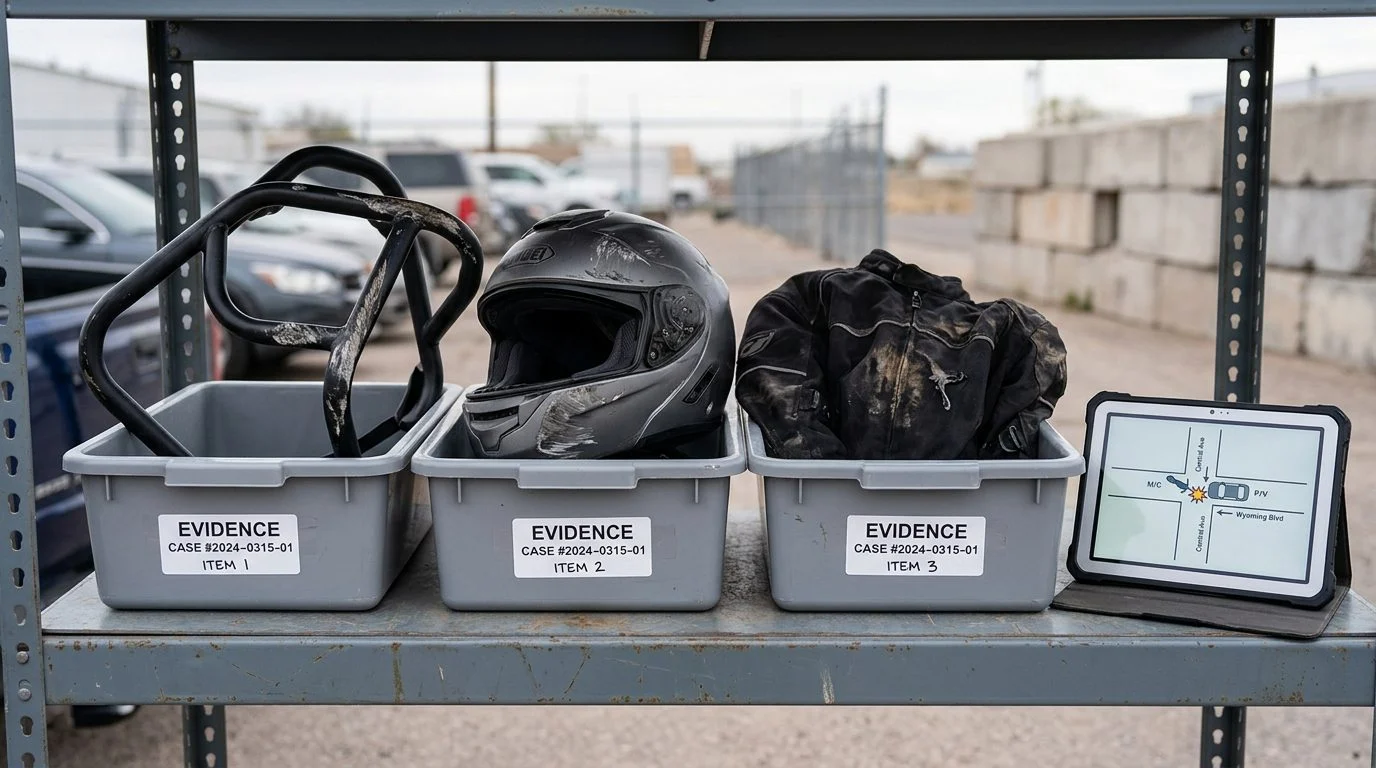
A medical examiner report after a fatal crash in Albuquerque is the official medical record of how a person died. It lists the cause of death, the manner of death, and the injuries the examiner found. It does not decide who was at fault.
Families often receive this report while they are still grieving. It is full of medical terms and can raise questions about a possible wrongful death claim. This guide explains each part in plain words, shows how the report fits with the police crash report and medical records, and covers what to check before you sign any records form.
Who Produces the Medical Examiner Report After a Fatal Crash in Albuquerque
The medical examiner’s findings come from the Office of the Medical Investigator (OMI), the New Mexico office that investigates deaths. A medical examiner is a physician who determines the medical cause and manner of a death.
The medical examiner’s work is separate from the police investigation. Police study how the crash happened. The medical examiner studies the person who died. Both look at the same event, so their findings should fit together, but they answer different questions.
Police paperwork runs on its own schedule. Under NMSA § 66-7-207, a driver in a crash that causes injury or death, or total property damage to an apparent extent of five hundred dollars ($500) or more, must forward a written report of the accident to the department of transportation within five days. A law enforcement officer who investigates the crash must forward a written report within twenty-four hours after finishing the investigation.
If you're holding a medical examiner report and wondering what it means for a possible claim, our team can talk it through with you in a free, confidential first consultation. Talk it through with our team — the first consultation is free, confidential, and carries no obligation.
What the Medical Examiner Report Contains
The report usually lists who died, the cause and manner of death, and a summary of injuries found at examination. Each section has its own job, so read them one at a time.
Autopsy findings describe the injuries the examiner saw and recorded. In a crash case, these may include fractures, internal injuries, or burns. Read this part slowly. It is the main link between the collision and the death.
Toxicology results list substances found in the body, such as alcohol or drugs, when testing was done. This section appears separately, and some results can take longer than the rest of the file.
The report uses medical language. Write down every term you don’t understand, and ask about each one before you rely on it. A misreading of one line can shape how you think about the whole case, so take your time.
Cause of Death Versus Manner of Death
The cause of death is the injury or medical condition that led to the death. The manner of death is the examiner’s classification of how the death happened. Families often mix these two up.
In a crash, the cause might be blunt force trauma or a traumatic brain injury. Manner of death is usually one of a few categories: accident, natural, homicide, suicide, or undetermined. Manner is a medical classification. It is not a ruling on who was at fault.
The cause of death is what ties the collision to the death. New Mexico asks whether the act or omission contributed to bringing about the injury and was reasonably connected as a significant link to it, per UJI 13-305; the instruction no longer uses the word “proximate.” A cause need not be the only explanation for the injury, nor the reason that is nearest in time or place, according to UJI 13-305 NMRA. The jury instruction commentary describes that link as “reasonably connected as a significant link” to the injury, in UJI 13-305.
A report with an undetermined or unusual manner needs careful reading. That is a good reason to talk it through with our team before you make decisions about a claim.
How the Medical Examiner Report Fits Into a Wrongful Death Claim
The medical examiner report is one of several records a wrongful death claim uses to show how the death happened. Under NMSA § 41-2-1, when a death is caused by another’s wrongful act, neglect, or default, and that act would have entitled the injured person to sue had death not ensued, the person or corporation that would have been liable shall be liable to an action for damages, notwithstanding the death of the person injured.
The claim is brought by the personal representative of the person who died. Under NMSA § 41-2-1, the person or corporation that would have been liable shall be liable to an action for damages, notwithstanding the death of the person injured. NMSA 1978, § 41-2-3 says the action is brought by and in the name of that representative. The statute also sets out who receives the proceeds, starting with a surviving spouse and children.
Timing matters. NMSA 1978, § 41-2-2 requires the action to be brought within three years after the cause of action accrues, and the cause of action accrues as of the date of death (NMSA 1978, § 41-2-2 — three years from the date of death). If death came days or weeks after the crash, the timeline in the report matters.
Our Albuquerque fatal crash claims page covers the claim in more detail.
What the Report Does Not Decide
The medical examiner report does not decide who caused the crash or how much a family can recover. Those questions depend on the full set of evidence, not one document.
As explained in Herrera v. Quality Pontiac, a negligence claim generally needs a duty owed by the defendant to the plaintiff, a breach of that duty (typically measured against a standard of reasonable care), and proof that the breach was both a proximate cause and a cause in fact of the plaintiff’s damages. A medical report helps show the cause of an injury, but by itself it does not prove the other elements.
The police crash report also has limits. Under NMSA § 66-7-213, accident reports made by persons involved in accidents are without prejudice to the individual reporting and are for the confidential use of the state highway and transportation department or other state agencies having use for the records for accident prevention purposes or for the administration of the laws of this state relating to the deposits of security and proof of financial responsibility, except that the department may disclose a person’s identity in certain cases and whether the vehicle’s owner or operator is insured. Except as that section provides, an accident report is not used as evidence in a trial arising from the crash. Because of that limit, a claim is built from several sources.
Your family’s own account of the crash still matters, and so do statements made to insurers. The driver of any vehicle involved in an accident resulting in injury to or death of any person must immediately stop at the scene, or as close to it as possible, and remain there until the driver has fulfilled the requirements of Section 66-7-203 NMSA 1978, under NMSA § 66-7-201. Failing to stop or to meet those requirements where the accident results in great bodily harm or death is a fourth degree felony, and knowingly doing so in those circumstances is a third degree felony; where the accident does not result in great bodily harm or death, it is a misdemeanor. In that situation, the medical report and scene evidence become even more important to tie the death to the crash.
Requesting Copies and Understanding the Timing
Families usually ask the Office of the Medical Investigator for copies of the medical examiner findings. Keep a written record of every request, including the date, the person you spoke with, and any case or reference number.
Preliminary information can come before the final report. Some findings, such as toxicology, can take longer than the initial documentation. When both are available, compare them line by line. Look for changes in the cause or manner of death, and write down each question you have.
Keep a dated copy of every document you receive, in the order you received it. A clear file lets you see what is still pending and what has already been shared with insurers or other parties.
Not sure what your next step is?
Talk it through with our team — the first consultation is free, confidential, and carries no obligation.
Before Signing a Medical Records Authorization
A medical records authorization is a signed permission that lets someone request a person’s medical records. It is a release form, not a medical exam. Families often receive one from an insurer after a fatal crash.
Check four things before you sign. First, the dates covered. Second, the providers named. Third, the types of records included, such as hospital notes, imaging, or mental health records. Fourth, whether the request is limited to crash injuries or reaches the person’s full history.
Prior medical history can matter to an injury claim. Read what a broad release would reach before you sign it. You can ask questions about any form first, and you can ask for a copy of what you sign.
Talking Through the Report With El Gringo Law
Families holding a medical examiner report after a fatal crash in Albuquerque can start with a free, confidential first consultation, with no obligation to continue. This can help when the report is confusing, the timing is unclear, or a records form is waiting for a signature.
If you’re reading this with a report in hand, you may be trying to understand what it says about your loved one’s death. You don’t have to sort through the medical terms or the forms alone. Our team can walk through the report with you and explain what each part means for your next step.
El Gringo Law’s responsible lawyer for this page is Josh Wood, who is licensed in New Mexico and Arizona. You can reach the firm through the contact form, or start a chat from the firm’s website at elgringolaw.com. Families who prefer Spanish can say so when they reach out.
Frequently Asked Questions
What is a medical examiner report after a fatal crash?
It is the official medical record of the cause and manner of death, plus a summary of injuries. It is written in medical language.
Does the medical examiner report decide who caused the crash?
No. It records medical findings, not fault. Fault is decided from the full set of evidence.
How long does a wrongful death lawsuit have to be filed in New Mexico?
Under NMSA § 41-2-2, the action must be brought within three years after the cause of action accrues, and the cause of action accrues as of the date of death (NMSA 1978, § 41-2-2 — three years from the date of death). The cause of action accrues as of the date of death.
Who files a wrongful death claim in New Mexico?
Under NMSA § 41-2-3, every such action must be brought by and in the name of the personal representative of the deceased person.
Can I get help in Spanish?
Yes. Families who prefer Spanish can ask for it when they contact El Gringo Law.
What the Medical Examiner Report Covers
Cause and manner of death
The report records the medical cause of death and how the death is classified, written in clinical language that can be hard to read without context.
Summary of injuries
It lists the injuries found during the examination, including those that may not have been visible at the scene.
Toxicology and testing
Where tests were run, the report may include lab findings. These results should be reviewed carefully alongside the rest of the file.
Questions to raise
A report often prompts questions about timing, injuries, and the sequence of events. Writing them down before a consultation can help.
Keep Your Own Copy and Your Own Notes
Request a copy of the medical examiner report and any related crash documents as early as you can. Write down what you remember and what your family was told. Speak with a lawyer before you give a recorded statement to an insurance company or sign any release.
How We Can Help Your Family Right Now
Explain the report
We walk through the medical terms, the injury summary, and the cause-of-death findings in plain English, so you know what the document says.
Gather the crash records
Police reports, photographs, witness contact details, and vehicle information can all matter. We help your family organize what exists and identify what is still missing.
Answer your questions
Our team is available to answer questions about the process. Every consultation is free, confidential, and carries no obligation to continue.
Handle contact from insurers
Insurance adjusters may call soon after a loss. We can help you decide how to respond while you are still grieving.