Wrongful Death · New Mexico
Survival Action or Wrongful Death Claim? Understanding the Two Claims After a Fatal Crash
El Gringo Law can explain how each one works. Your first consultation is free, confidential, and comes with no obligation to continue.
By Josh Wood · Published October 30, 2026
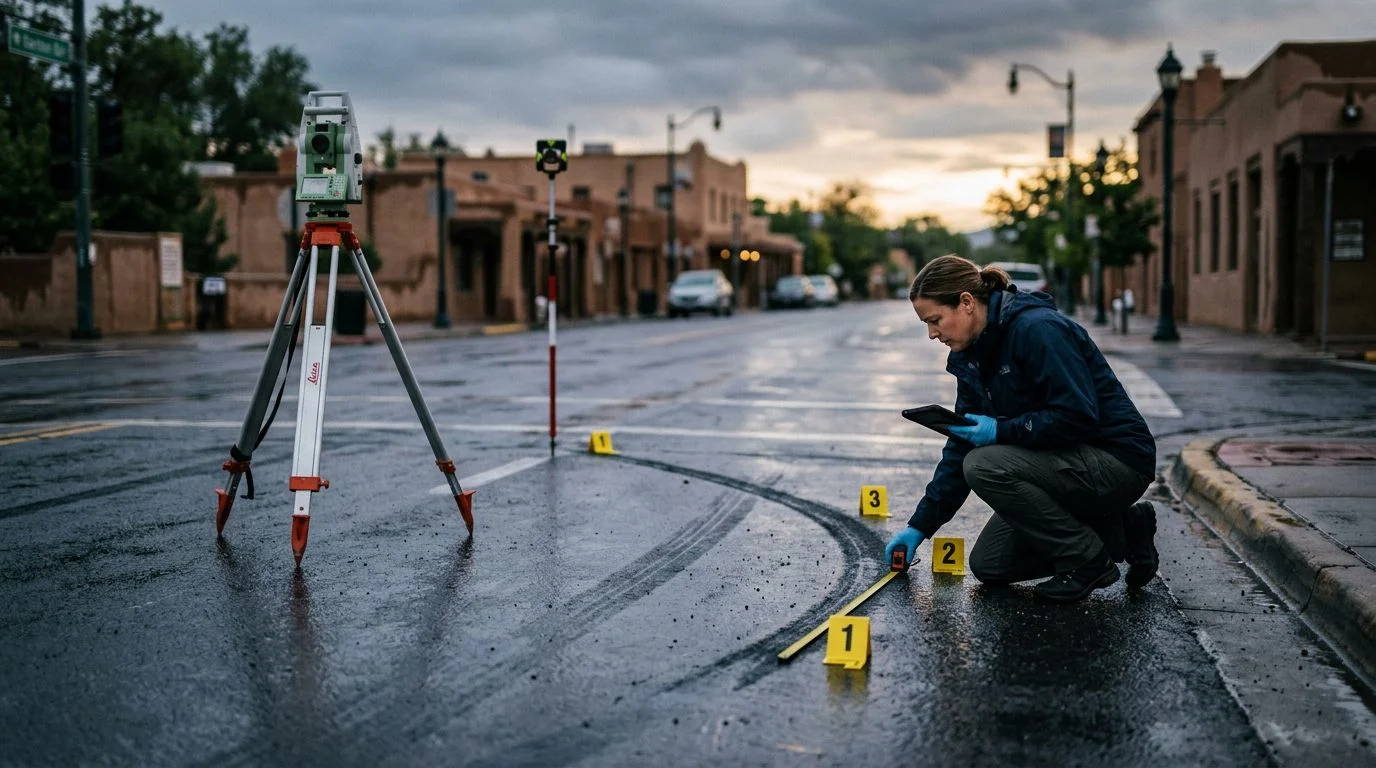
Survival action New Mexico claims are often confused with wrongful death claims, so start with the core difference. A survival action is a claim for the harm the injured person suffered before dying. A wrongful death claim is for the losses the surviving family suffers because of the death. Both can come from the same crash, fall, or violent incident. They answer different questions: what the person went through, and what the family lost.
The short answer: survival action versus wrongful death claim
A survival action looks back at the injured person’s own experience. It covers the injuries and the pain, fear, and distress that came before death. A wrongful death claim looks forward. It covers what the death cost the people left behind.
Families often hear both terms from insurers, hospital staff, or friends. Each term points to a different set of losses. Knowing which one fits helps a family ask the right questions early.
Our team at El Gringo Law represents people in car accident, trucking accident, premises liability, negligent security, and catastrophic injury matters. Those are the situations where questions about these two claims often come up. Josh Wood is the responsible lawyer for this page.
If your family is still sorting out which claim fits after a death from a crash, fall, or violent act, our team is ready to help you understand your options. Talk it through with our team — the first consultation is free, confidential, and carries no obligation.
What a wrongful death claim means under New Mexico’s Wrongful Death Act
The New Mexico Wrongful Death Act creates the wrongful death claim. Under NMSA § 41-2-1, when a person’s death is caused by another’s wrongful act, neglect, or default, the person or corporation that would have been liable had death not ensued is liable to an action for damages, notwithstanding the death of the person injured. The death does not end that liability.
Under § 41-2-3, the jury may award damages it considers fair and just. It looks at the pecuniary injury, meaning money-related loss, that the death caused to the surviving party entitled to the judgment. It also looks at any mitigating or aggravating circumstances of the wrongful act.
Some family members may also claim loss of consortium. That is the loss of a close, mutually dependent relationship. New Mexico courts say this claim belongs to the family member, not to the injured person or the estate, as Thompson v. City of Albuquerque explains.
Every case is different. We cannot promise any dollar amount or outcome for a family’s loss.
What a survival action covers
A survival action covers the harm the person suffered between the injury and death. That can include the injuries themselves and the pain and distress that followed. Someone who lived for hours or days after a crash, fall, or assault may have lived through that suffering. The survival claim focuses on that time.
The timeline matters. A catastrophic injury, such as a spinal cord injury, an amputation, or a burn, can be followed by death after a gap in time. Under New Mexico law, a proximate cause of an injury need not be the only cause, the last cause, or the nearest cause, according to Herrera v. Quality Pontiac. That means an injury can still count even when other medical problems played a role.
Medical bills and other costs tied to the injury may be part of the review. Our team looks at which costs the records and facts support.
A survival claim looks backward at the person’s experience. A wrongful death claim looks at the family’s losses. Keeping those two lenses apart helps families read insurer letters and claim documents.
Who brings each claim and who benefits
Under § 41-2-3, every wrongful death action is brought by and in the name of the personal representative of the deceased person. The personal representative is the person who acts for the estate. Families often need to work out who that is before a claim can move forward.
Under § 41-2-3, a wrongful death judgment is not liable for the deceased person’s debts only if the decedent left a spouse, child, parent, sibling or grandchild. It then sets a distribution order. If there is a surviving spouse and no children, the spouse receives the proceeds. If there is a spouse and children or grandchildren, the spouse takes one-half and the children and grandchildren take the other half. Parents take the proceeds only if the deceased was a minor, childless and unmarried, and siblings come later in the list, only if there is no father, mother, husband, wife, child or grandchild.
The deadline is strict. Under § 41-2-2, the action must be brought within three years after the cause of action accrues. That cause of action accrues as of the date of death.
Helpful records include the death certificate, any probate paperwork, the accident or incident report, and medical records. Who qualifies as personal representative or statutory beneficiary turns on family facts. We review those questions at the consultation.
How the two claims differ in damages and purpose
The simple split looks like this:
- Wrongful death: the family’s losses; under § 41-2-2, the action must be brought within three years after the cause of action accrues.
- Survival action: the harm the person suffered before death, pursued for the estate.
The same accident can support both claims. Each is a separate claim, so the proof for one may differ from the proof for the other.
Negligence basics apply to both. A negligence claim generally needs a duty owed to the plaintiff, a breach of that duty, and a proximate cause of the damages, as Herrera v. Quality Pontiac states. Fault can also be shared. New Mexico follows pure comparative negligence, so a plaintiff suing in negligence is no longer totally barred from recovery because of their own fault, under Scott v. Rizzo.
Our team reviews which claims fit the facts of each death, including car, trucking, premises, negligent security, and catastrophic injury cases.
Situations where families often face both claims
Car accidents. A fatal crash can support both kinds of claims. New Mexico law requires a driver in a crash involving injury or death to stop at the scene. Under NMSA 1978, § 66-7-201, failing to stop where the crash results in great bodily harm or death is a fourth-degree felony, and knowingly doing so is a third-degree felony.
Trucking accidents. Commercial collisions often involve more records and possibly more parties. The review may look at the driver, the vehicle, and who was responsible for them.
Premises liability and negligent security. Deaths on property can raise both claim types. New Mexico’s jury instruction commentary explains that a landowner must use ordinary care to keep the premises safe for visitors, and that the duty arises from a foreseeable risk that a third person will injure a visitor, as stated in UJI 13-1320. The facts decide which claims apply.
Catastrophic injuries. When death follows a spinal cord injury, amputation, or burn, the time between injury and death can matter to the survival question. Our wrongful death page covers how these claims are framed.
Not sure what your next step is?
Talk it through with our team — the first consultation is free, confidential, and carries no obligation.
What the first consultation covers
The first step is a free, confidential first consultation with no obligation to continue.
Families can share how the death happened, the timeline from injury to death, who the surviving family members are, and what records already exist. Families can bring whatever they have. Our team can explain what else may help.
At the consultation, the firm can explain which claims may fit the facts and what the next steps look like. The conversation stays focused on the family’s questions.
Reaching out about a loss in your family
If your family lost someone after a crash, a fall, a violent act, or a catastrophic injury, you may be trying to work out which claim fits. You do not have to sort through the New Mexico rules alone.
Contact El Gringo Law through the contact form to schedule a consultation with Josh Wood, the responsible lawyer for this page. Our website is elgringolaw.com.
Is a survival action the same as a wrongful death claim?
No. A survival action covers the injured person’s harm before death. A wrongful death claim covers the family’s losses.
How long do families have to file?
Under § 41-2-2, the action must be brought within three years after the cause of action accrues. The cause of action accrues as of the date of death.
Who receives a New Mexico wrongful death recovery?
NMSA 41-2-3 sets out who may share in a wrongful death recovery.
Two claims, two different purposes
Survival action
Focuses on the harm the injured person suffered before death, such as physical pain and the losses they experienced while they were still alive.
Wrongful death claim
Focuses on the losses the surviving family has experienced because of the death, including the impact on the people who depended on or cared for the person.
Why the difference matters
Understanding which one applies to your family's situation is an important first step.
How El Gringo Law can help
Plain-language answers
We explain the claims, the process, and your options in clear terms, without legal jargon.
Support for grieving families
We understand that a fatal injury is a painful time. We approach every conversation with patience and respect.
Confidential consultation
Your first consultation is free and confidential, with no obligation to continue.
You choose the next step
Reach out by phone, online form, or chat. There is no pressure to decide anything during your first conversation.
Don't assume the claims are the same
A survival action and a wrongful death claim are separate. Many families are unsure which claim applies to their situation. Talking with a lawyer early can help you understand your options.