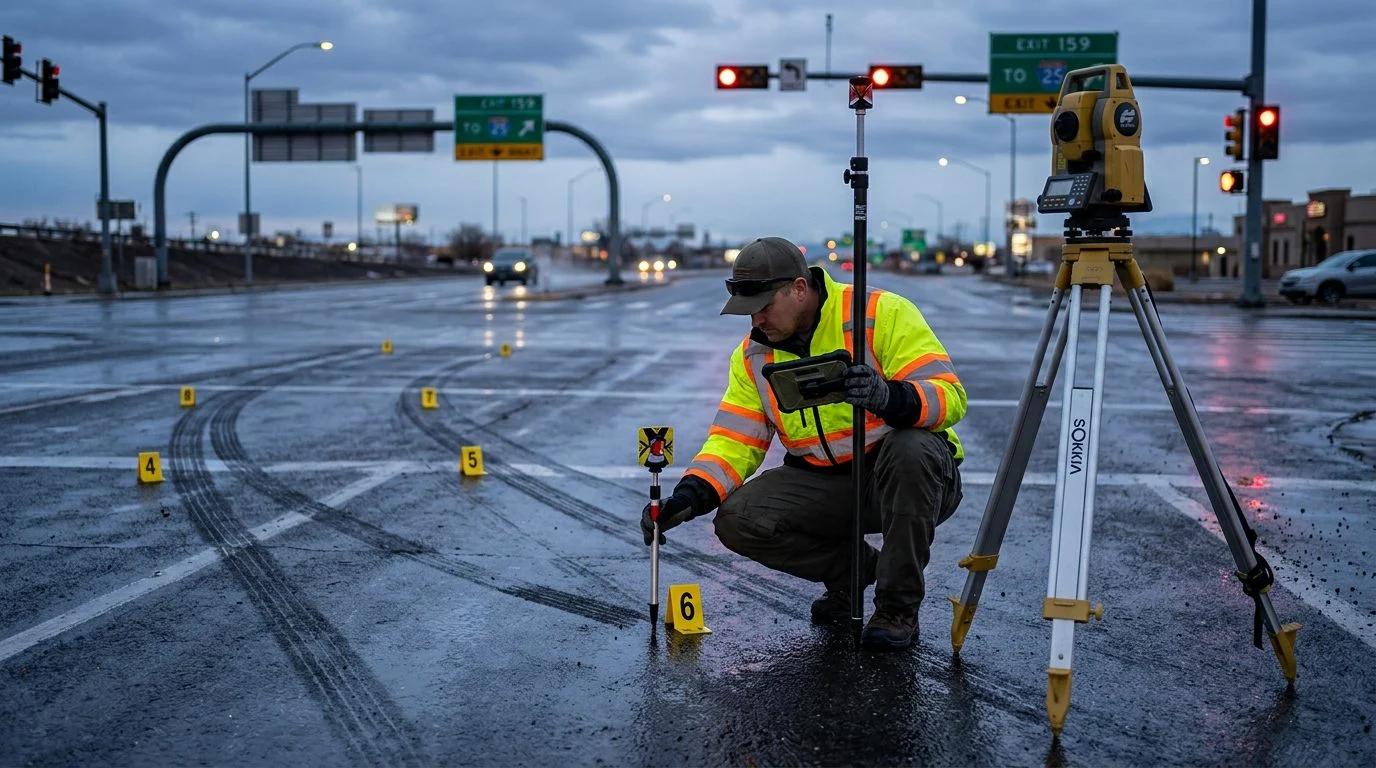
Wrongful Death | I-40 and New Mexico
When a Fatal Crash on I-40 Takes Someone You Love
El Gringo Law helps New Mexico families pursue wrongful death claims after fatal crashes. Your free first consultation is confidential and comes with no obligation to continue.
By Josh Wood · Published November 3, 2026
Albuquerque Wrongful Death Lawyer for I-40 Fatal Crashes
A fatal crash on I-40 in Albuquerque can leave a family dealing with grief, funeral plans, and insurance calls all at once. Under New Mexico law, a wrongful death claim is brought by and in the name of the personal representative of the deceased person when another person’s wrongful act or negligence causes a death. Families searching for a fatal crash I-40 wrongful death lawyer Albuquerque often have the same questions. This guide answers them in plain language.
If you are handling a loss from an I-40 crash while also dealing with paperwork and insurance calls, our team is ready to talk through your family's questions with you. Talk it through with our team — the first consultation is free, confidential, and carries no obligation.
What a Wrongful Death Claim Is and Who It Is For
A wrongful death claim is a civil lawsuit for damages after another person’s wrongful act, neglect, or default causes a death. It is separate from any criminal case. New Mexico’s wrongful death statute, Section 41-2-1, provides that whenever a person’s death is caused by the wrongful act, neglect or default of another, and that act, neglect or default would, if death had not ensued, have entitled the injured person to maintain an action and recover damages, then the person who, or the corporation which, would have been liable shall be liable to an action for damages, notwithstanding the death of the person injured, even if the death was caused under circumstances that amount in law to a felony.
The personal representative brings the lawsuit in the deceased person’s name. Section 41-2-1 does not define the personal representative; it provides that the person who, or the corporation which, would have been liable, if death had not ensued, shall be liable to an action for damages. § 41-2-3 sets this rule.
Money from a judgment goes to the family members the statute names; if there are none, the proceeds are disposed of in the manner authorized by law for the disposition of the personal property of deceased persons. Those can include a surviving spouse, children, grandchildren, parents, or siblings, depending on who survives. Which relatives qualify turns on each family’s situation, so it helps to ask early.
Why I-40 Fatal Crashes Often Involve More Than Two Drivers
Fatal crashes on I-40 often involve several vehicles. Several people or companies may share responsibility. Interstate 40 runs through Albuquerque and Bernalillo County. It carries both daily commuter traffic and heavy commercial freight.
When a semi-truck is involved, the potentially responsible parties can include the driver, the trucking company, and the vehicle’s owner. A vehicle owner can face a claim if it entrusted a vehicle to a driver it knew or should have known was incompetent, and that incompetence caused the injury. See DeMatteo v. Simon.
Commercial drivers must record their duty status for each 24-hour period under 49 CFR § 395.8. Those records, along with other carrier files, can matter to the claim. Evidence can disappear quickly. Families should ask for evidence preservation early.
What a Wrongful Death Claim Can Cover
A New Mexico jury may award compensatory and exemplary damages that it deems fair and just. Under § 41-2-3, the jury considers the pecuniary (financial) injury the death caused the family members entitled to the judgment. It also weighs the mitigating or aggravating circumstances of the crash.
Claims often include these areas:
- Financial losses. The death’s financial effect on the family members who receive the judgment.
- Loss of consortium. Under Thompson v. City of Albuquerque, these damages come from the death of someone in a sufficiently close relationship. They belong to the family member, not the estate.
- Debts. Section 41-2-3 provides that the proceeds of a wrongful death judgment are not liable for any debt of the deceased, provided the decedent has left a spouse, child, father, mother, brother, sister, or child or children of a deceased child, as defined in the New Mexico Probate Code.
The value of any claim turns on the facts of each family’s case.
How the Process Works, Step by Step
Most cases move from a first conversation to investigation, then to insurance talks, and finally to a settlement or a lawsuit. Here is the typical path:
- First consultation. The first consultation is free, confidential, and carries no obligation to continue. The family shares the crash details and the papers they already have.
- Investigation. The review covers the crash report, the scene, vehicle information, witness accounts, and medical records.
- Responsible parties and insurance. Several policies may apply, so each one needs to be identified.
- Documenting losses. The family gathers medical bills, funeral bills, and details about the decedent’s income and role at home.
- Negotiation, then a lawsuit if needed. Settlement talks come first. If a fair result is not reached, a lawsuit may be filed.
Timelines vary with the number of parties, the evidence, and whether the case settles or goes to trial.
Deadlines and New Mexico Rules Families Should Know
Under NMSA 1978, § 41-2-2, an action brought under the wrongful death provisions must be brought within three years after the cause of action accrues, and the cause of action accrues as of the date of death (NMSA 1978, § 41-2-2 — three years from the date of death). Under § 41-2-2, that cause of action accrues as of the date of death.
Claims involving a government vehicle or entity follow the Tort Claims Act, which has a shorter notice rule. Under § 41-4-16(C), a wrongful death notice may be presented within six months after the injury that resulted in the death.
New Mexico uses comparative negligence. A shared-fault finding does not bar recovery, but it reduces it. See Scott v. Rizzo. Under § 41-3A-1(B), in causes of action to which several liability applies, a defendant who establishes that another’s fault is a proximate cause of the injury pays only the portion of the total damages equal to its ratio of fault to the total fault attributed to all persons.
Because these deadlines differ, families should ask about timing early.
Not sure what your next step is?
Talk it through with our team — the first consultation is free, confidential, and carries no obligation.
Dealing With Insurance Adjusters After a Death
An insurance adjuster may contact the family soon after the crash. That can happen before the full losses are known. Early offers may not reflect what the family has lost.
New Mexico lists failing to attempt, in good faith, prompt and fair settlements when liability is reasonably clear as an unfair claims practice. The statute covers an insured’s claims when the practice is knowingly committed or performed with such frequency as to indicate a general business practice. See § 59A-16-20(E).
Section 59A-16-20 defines certain claims practices by an insurer or other person, such as failing in good faith to attempt prompt, fair and equitable settlements of an insured’s claims where liability is reasonably clear, as unfair and deceptive practices and prohibits them when knowingly committed or performed with such frequency as to indicate a general business practice. See NMSA 1978, § 59A-16-20.
Keep copies of the crash report, insurer letters, medical and funeral bills, and every offer in writing. Ask questions before signing anything.
Why Families Work With El Gringo Law
El Gringo Law represents clients in car accident, trucking accident, and wrongful death matters across New Mexico, including Albuquerque and Bernalillo County. The firm’s name speaks to its voice: the gringo on your side.
- Responsible lawyer. Josh Wood is the responsible lawyer for this page. He is licensed in New Mexico and Arizona.
- Team support. Our team can answer questions about records, deadlines, and next steps.
- Plain talk. The firm explains each step, so families can decide what they need without pressure.
Questions Families Ask About Fatal I-40 Crash Claims
Do we have to go to court?
Some claims settle, and others need a lawsuit. The path varies with each case.
What if our loved one was partly at fault?
Shared fault can reduce a recovery in New Mexico, but it does not bar the claim.
How long do we have to file?
Under NMSA 1978, § 41-2-2, the action must be brought within three years after the cause of action accrues, and the cause of action accrues as of the date of death (NMSA 1978, § 41-2-2 — three years from the date of death).
How soon should a family talk to a fatal crash I-40 wrongful death lawyer Albuquerque?
Sooner is better. Under NMSA 1978, § 41-2-2, every action instituted by virtue of the provisions of this and the preceding section [41-2-1 NMSA 1978] must be brought within three years after the cause of action accrues.
What happens at the first consultation?
The family shares the crash details and papers, and the firm explains the next steps.
Talk With El Gringo Law About Your Family’s Situation
You may be reading this while planning a funeral, answering calls, or sorting through a crash report you never expected to see. If you want to talk through the crash and your family’s questions, you can call, use the contact form, or start a chat. Josh Wood is the responsible lawyer for this page. Visit elgringolaw.com for contact details.
How we approach your family's case
Looking at what happened
We review crash reports, records and other evidence to understand how the crash occurred and who may be responsible.
Working with your family
We keep you informed, answer your questions in plain language, and take time to understand what matters most to your family.
Respect for your loss
We understand that a death is far more than a legal matter, and we handle your case with that in mind.
Easy ways to reach us
Call our office, submit the contact form, or start a chat. Josh Wood, a lawyer licensed in New Mexico and Arizona, is the responsible lawyer for this page, and our team supports every case.
Before you speak with an insurance company
Insurance adjusters may contact your family soon after a fatal crash. Before giving a recorded statement or signing any document about your loss, consider speaking with a lawyer first.
Fatal crashes we help families with
Commercial truck crashes
Collisions involving semi-trucks and other commercial vehicles on I-40 and other New Mexico highways can raise complex questions about responsibility.
Multi-vehicle collisions
Chain-reaction crashes and pileups often involve several drivers, companies or insurers, and the facts can take time to sort out.
Impaired or distracted driving
When a driver's impairment or distraction contributes to a death, we work to understand the full picture of what happened.
Pedestrian and motorcycle fatalities
Families who lose a loved one who was walking, riding or otherwise unprotected on the road often face questions that need careful investigation.