Albuquerque and Bernalillo County | Wrongful Death Motorcycle Cases
Lost a Loved One in a Motorcycle Crash?
El Gringo Law represents families in wrongful death cases arising from motorcycle collisions. Your first consultation is free, confidential, and carries no obligation to continue.
By Josh Wood · Published November 3, 2026
When a motorcycle rider dies in a crash with a car or truck, the family may be able to bring a wrongful death claim under New Mexico law. That claim seeks money for the losses the death caused. This page explains who can file, what the law says can be recovered, which evidence matters, and what to expect in Albuquerque and Bernalillo County.
What a Wrongful Death Claim After a Motorcycle Crash Means
A wrongful death claim is a civil case a family brings after another person’s wrongful act, neglect or default causes a death. New Mexico allows these claims when the injured person could have sued and recovered damages had they lived. The wrongful-death statute, § 41-2-1, has a history note that reads: “History: Laws 1882, ch.”
The core question is simple. Did someone fail to use reasonable care, and did that failure cause the death? New Mexico negligence claims generally require a duty, a breach of that duty, and a breach that was a proximate cause of the harm. New Mexico negligence elements
A traffic ticket or criminal case runs on its own track. The civil claim still requires proof of fault in its own right. A charge does not settle the civil question.
Riders have little protection in a collision. The injuries in these crashes are often severe, and the family’s losses can be large.
If a car or truck crash in Albuquerque took your rider, you do not have to sort out the claim alone; our team is ready to listen and explain your options. Talk it through with our team — the first consultation is free, confidential, and carries no obligation.
Who Can Bring the Claim and What Damages May Be Available
The personal representative of the deceased person brings the wrongful death action. The case is filed in that representative’s name. NMSA 1978 § 41-2-3
The statute names the family members who may share in any judgment. These include a spouse, children and grandchildren. Under New Mexico’s wrongful death statute, § 41-2-3(D), parents may take directly when the person who died was a minor, childless and unmarried, and brothers and sisters may take under Subsection E when there is no parent, spouse, child or grandchild. If no relative named in Subsections A through E qualifies, § 41-2-3(F) provides a fallback: the proceeds of the judgment are distributed in the manner authorized by law for the personal property of deceased persons. The statute also sets an order for dividing the proceeds. Under § 41-2-3, the proceeds are shielded from the deceased person’s debts only provided the decedent has left a spouse, child, father, mother, brother, sister or child or children of the deceased child.
A jury may award compensatory and exemplary damages it finds fair and just. It weighs the financial injury the death caused to the surviving family members. It also considers any aggravating or mitigating circumstances of the wrongful act. NMSA 1978 § 41-2-3
Some family members may also bring a loss of consortium claim. This claim covers damage to a close relationship with the person who died. The claim belongs to the family member, not to the estate. Thompson v. City of Albuquerque The claimant must show a mutually dependent relationship. The jury instruction’s commentary lists factors, such as mutual dependence, the duration of the relationship and a sharing of a common residence, that bear on whether the family member and the person who died shared a sufficiently close relationship (UJI 13-1810A NMRA).
How much any family member can recover depends on the facts and evidence in each case.
The filing deadline is three years after the cause of action accrues, and the cause of action accrues as of the date of death (NMSA § 41-2-2). NMSA 1978 § 41-2-2 Early work helps preserve evidence that can disappear.
Common Causes of Fatal Motorcycle Crashes With Cars and Trucks
Fatal crashes between motorcycles and cars or trucks often involve a driver who turned, changed lanes or followed too closely. Each pattern has its own rules.
- Left turns across a rider’s path. A driver turning left in an intersection must yield to oncoming traffic that is close enough to be a hazard. NMSA 1978 § 66-7-329
- Turning left in an intersection. A driver turning left within an intersection must yield the right-of-way to oncoming vehicles that are within the intersection or so close as to constitute an immediate hazard.
- Lane changes and blind spots. A driver who moves into a rider’s lane can cause a fatal collision. Mirrors and blind spots matter.
- Large trucks. Trucks have large blind spots and long stopping distances. Federal hours-of-service rules limit how long commercial drivers may drive, and those records can matter.
- Hit-and-run. A driver who fails to stop after a crash that causes great bodily harm or death commits a felony. NMSA 1978 § 66-7-201
Distracted or impaired driving is shown through records and witness accounts, not guesses. The University of New Mexico’s Traffic Research Unit prepares annual crash reports for NMDOT, with breakdowns by county. Those reports give useful context for Bernalillo County.
Evidence That Matters in a Fatal Motorcycle Crash Claim
The most useful evidence shows where each vehicle was, how fast it moved, and what each driver could see. Start collecting it early.
- The crash report. The police report is a starting point. New Mexico law limits when an accident report can be used as evidence at trial, so it should not be the only proof. NMSA 1978 § 66-7-213
- The medical examiner’s findings. These establish the cause of death and help link the crash to the death.
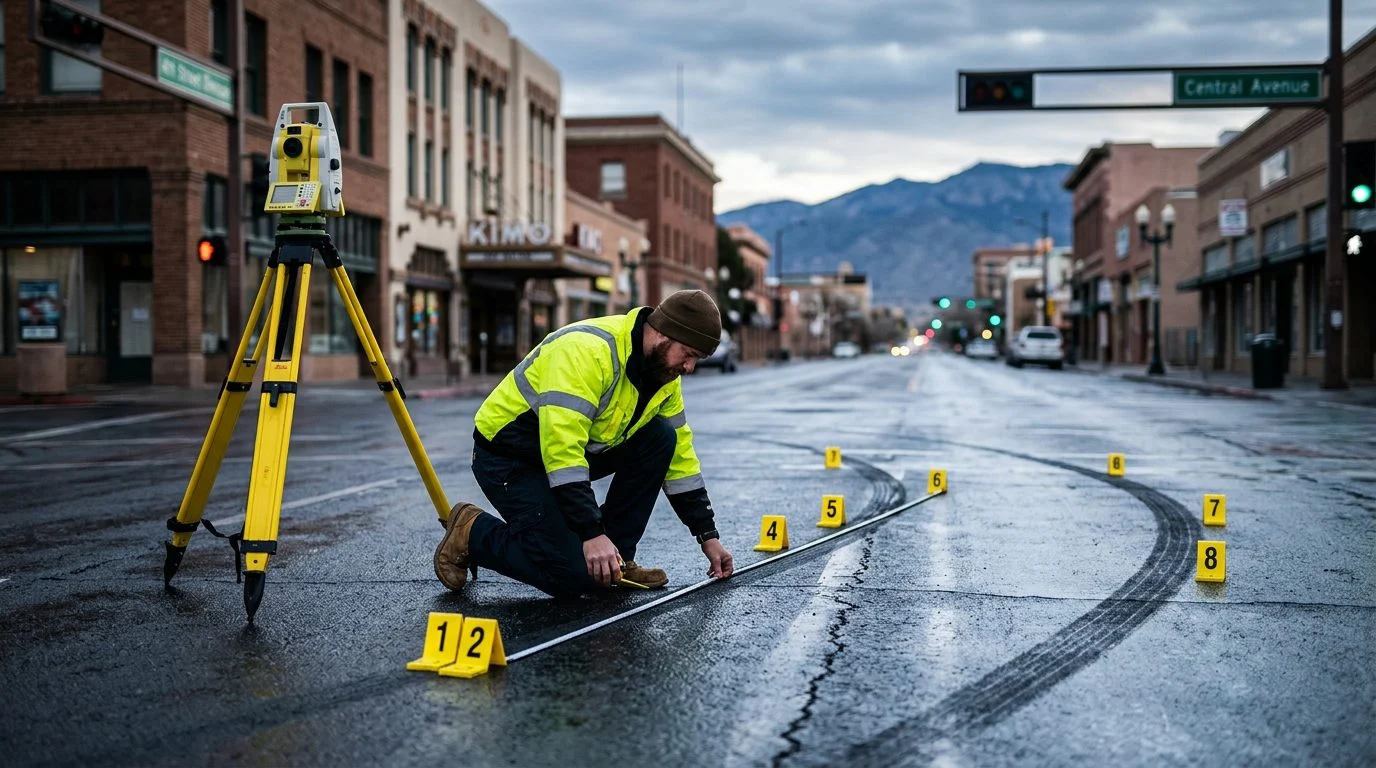
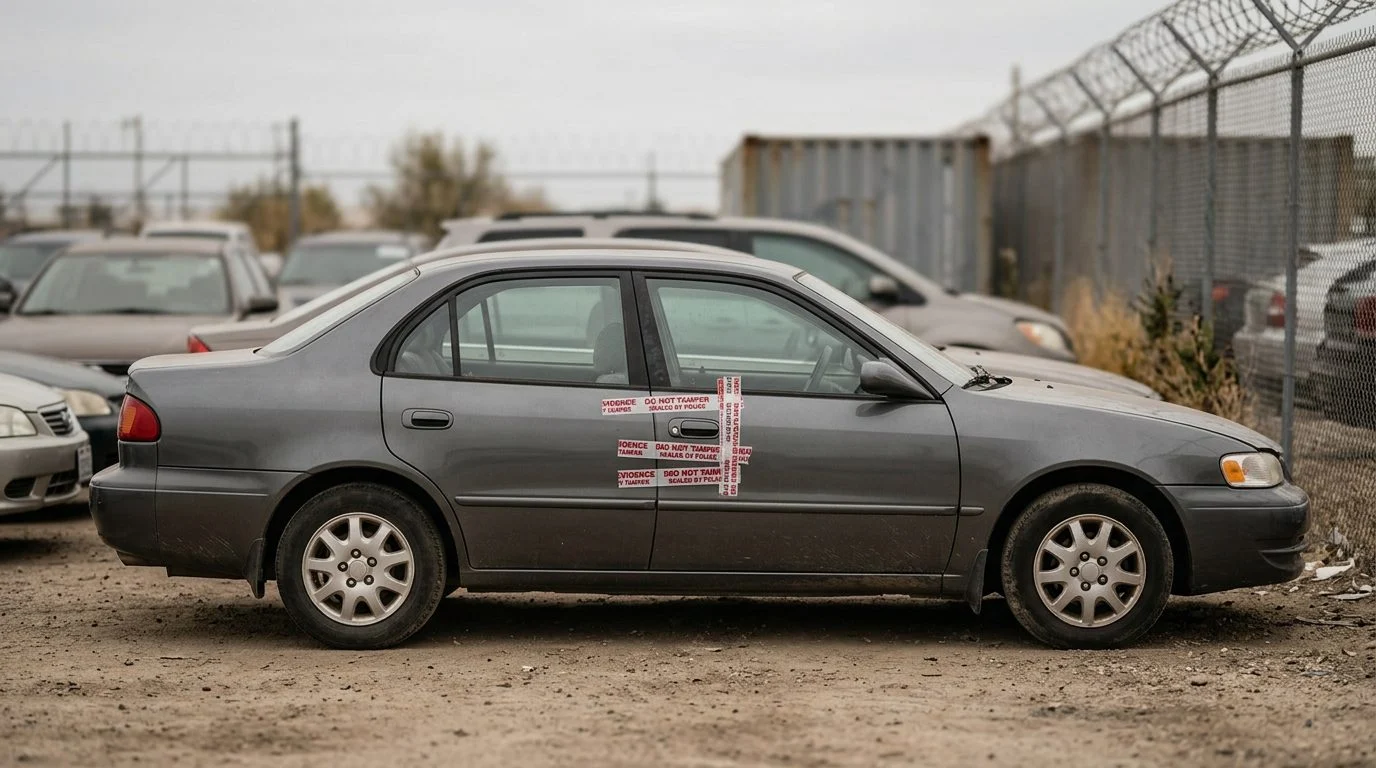
- Vehicle and scene evidence. Vehicle damage, skid marks and scene photos can be lost during repairs or cleanup. Modern vehicles may store crash data.
- Video. Dashcam footage and nearby business cameras can be overwritten quickly.
- Witnesses and records. Witness names, and phone records obtained lawfully, may show timing.
- The motorcycle and gear. Ask before the motorcycle or the rider’s gear is repaired, sold or thrown away.
A fatal crash often calls for reconstruction work. An expert can estimate speed, lane position and sight lines from the physical evidence.
Dealing With Insurance Adjusters and Comparative Fault
The at-fault driver’s insurer may contact the family soon after the crash. It is reasonable to take time before answering questions or signing anything.
Ask for time before giving a recorded statement. Read any release carefully, and know what it gives up before you sign.
New Mexico law defines unfair claims practices by an insurer or other person, when knowingly committed or performed with such frequency as to indicate a general business practice, as unfair and deceptive practices. These include, when knowingly committed or performed with such frequency as to indicate a general business practice, ‘not attempting in good faith to effectuate prompt, fair and equitable settlements of an insured’s claims in which liability has become reasonably clear’; because that item speaks of an insured’s claims, it may not apply to a family making a claim against the at-fault driver’s insurer. New Mexico law defines unfair claims practices for insurers. These include not attempting in good faith to effectuate prompt, fair and equitable settlements of an insured’s claims in which liability has become reasonably clear, which is defined as an unfair and deceptive practice, and is prohibited, when committed by an insurer or other person knowingly or with such frequency as to indicate a general business practice (NMSA § 59A-16-20).
A rider’s share of fault reduces recovery by that percentage but does not bar it. Under UJI 13-2219 NMRA, where apportionment of negligence among defendants or non-parties is at issue, the jury assigns a percentage to each person named and multiplies each defendant’s percentage by the plaintiff’s total damages.
Insurers may argue that the rider was speeding or in the wrong lane. The evidence is how the family answers those points.
What to Expect: The Process and Timeline
The process usually moves from an initial consultation to investigation, a settlement demand and, if needed, a lawsuit.
- Initial consultation. The family shares the facts, and the team explains the options. The initial consultation is a free, confidential initial consultation with no obligation to continue.
- Investigation and evidence preservation. The team requests records, contacts witnesses and arranges reconstruction when needed.
- Identifying responsible parties and insurance. This can include drivers, trucking companies and property owners when the facts support it. Claims against a government entity can have shorter notice deadlines, so raise that early.
- Settlement demand. The team presents the claim to the insurer with documented losses.
Timing varies widely from case to case. The team explains the expected pace as the facts develop.
Not sure what your next step is?
Talk it through with our team — the first consultation is free, confidential, and carries no obligation.
Why Families Work With El Gringo Law
El Gringo Law handles wrongful death, car accident, trucking accident and catastrophic injury cases. Josh Wood is the responsible lawyer for this page. He is licensed in New Mexico and Arizona.
Our team includes support staff who handle records requests, scheduling and client communication. Staff members are not lawyers, and the firm answers for their work.
Our approach is direct. We explain each step in plain language and answer questions as they come up. We aim to keep families informed, so they can make decisions with clear information.
Every case is different, so no one can say how a particular claim will end.
Frequently Asked Questions About Motorcycle Wrongful Death Claims
Does a criminal charge have to come first?
No. The civil claim is separate from any criminal case.
Who files the wrongful death case?
The personal representative of the deceased person files it. The proceeds then follow the order set by statute.
How long does the family have?
Under NMSA § 41-2-2, an action must be brought within three years after the cause of action accrues, and that accrual occurs as of the date of death (NMSA § 41-2-2).
What if the rider was partly at fault?
New Mexico reduces recovery by the rider’s share of fault. It does not bar the claim.
Must the family talk to the other driver’s insurer?
The family may ask for time first. Read any release carefully before signing.
Talk With Our Team About Your Family’s Loss
If a car or truck crash in Albuquerque took your rider, you may be facing records requests, insurer calls and a filing deadline all at once. Josh Wood, the responsible lawyer for this page, and our team can talk through your questions. Reach out through the El Gringo Law contact form.
What Families Can Expect From Us
A Direct Conversation
Josh Wood and our team will listen to what happened and answer your questions about the process in plain language.
A Focus on Wrongful Death
The firm's work includes wrongful death claims, car accidents, and trucking accidents, so families can bring a loss to a team that handles these matters.
Care for Your Family
We understand that a sudden death affects every part of family life. We will treat your situation with patience and respect.
Clear Information
We explain each step, what information may be needed, and what to expect, so you can make decisions with confidence.
Confidential and No Obligation
Your first consultation is free and confidential, and you are under no obligation to continue after it.
Before You Speak With an Insurance Company
Insurance adjusters may contact your family soon after a crash. Talk with a lawyer about what you say before giving any statement or signing any document.
Helpful Steps While You Grieve
Gather the Basics
Write down the date, time, and location of the crash, along with the names and contact details of any witnesses you know about.
Keep Records
Save the police report number, photos, medical and funeral bills, and any letters you receive from insurance companies.
Limit Public Posts
Avoid posting about the crash or the people involved on social media while your family's case is being reviewed.
Reach Out for a Consultation
Contact El Gringo Law for a free, confidential conversation about your family's situation and the questions you have.