Wrongful Death · Albuquerque and Bernalillo County
When a Pedestrian Is Killed, Your Family Deserves Answers
El Gringo Law helps Albuquerque families understand their options after a sudden loss on the road, starting with a free, confidential first consultation.
By Josh Wood · Published November 10, 2026
Losing someone to a driver while they were walking is a shock, and the questions come fast. Can your family file a lawsuit? Often, yes.
In New Mexico, a family may be able to bring a wrongful death claim when a driver’s negligence caused a pedestrian’s death. This page explains who files, what a claim can seek, the deadline, and how fault works.
Yes, a Wrongful Death Claim Is Often Possible After a Pedestrian Death
Yes. New Mexico law allows a claim when one person’s wrongful act, neglect or default causes another person’s death. The statute makes the person who would have been liable, had the injured person lived, liable for damages anyway (NMSA 1978, § 41-2-1).
A wrongful death claim is a civil case. It is separate from any criminal charge against the driver.
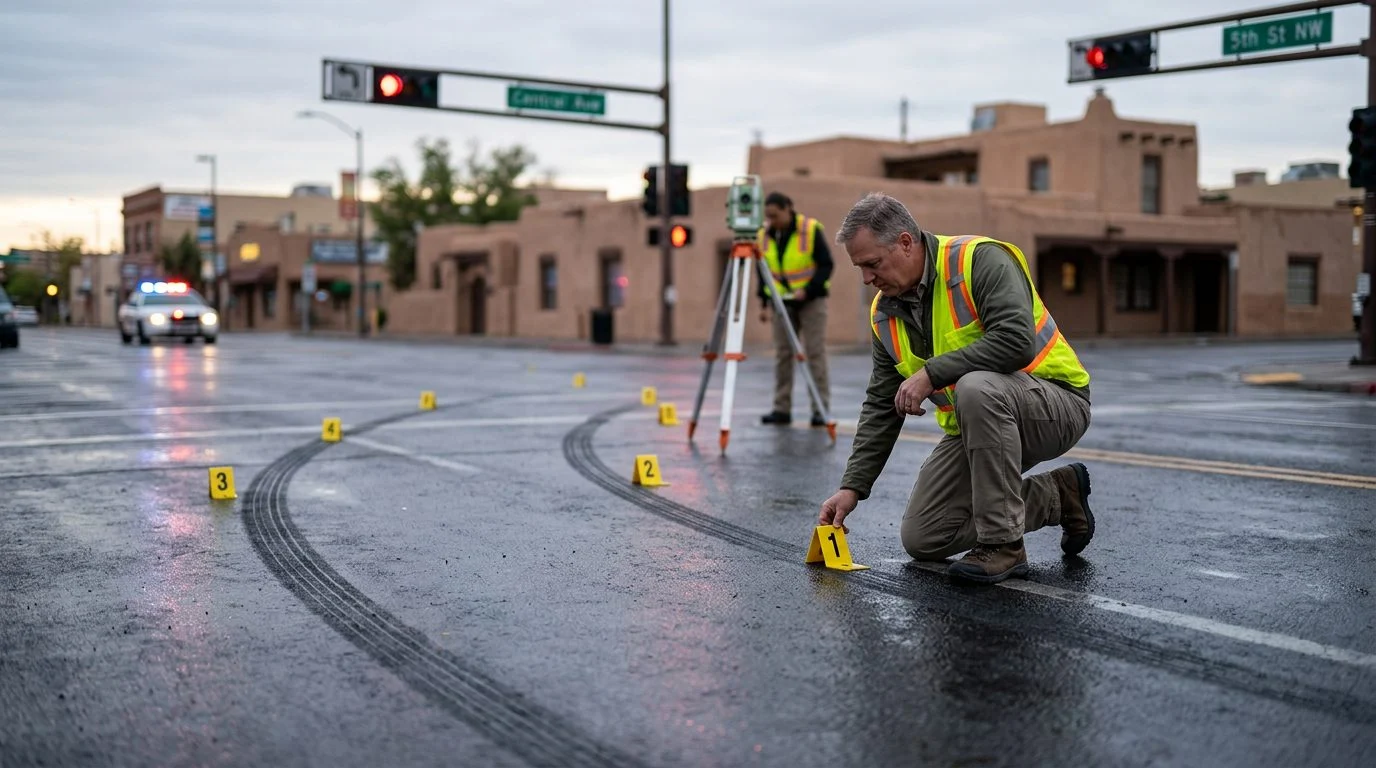
A negligence claim generally needs a duty owed, a breach of that duty, and a breach that was a proximate cause of the harm (Herrera v. Quality Pontiac). That duty is typically measured by reasonable care. In a pedestrian case, the crash facts are where that proof starts.
Whether a specific claim can proceed depends on the facts of the crash and who was at fault.
If your family is facing a pedestrian death in Albuquerque, you don't have to sort out the police report and insurance calls alone. El Gringo Law offers a free, confidential initial consultation. Talk it through with our team — the first consultation is free, confidential, and carries no obligation.
Who Can File a Wrongful Death Claim in New Mexico?
The law requires the action to be brought by and in the name of the personal representative of the deceased person (NMSA 1978, § 41-2-3).
If the person who died left a spouse, child, parent, brother, sister or grandchild, the proceeds are not used to pay the deceased’s debts. The statute sets the order of payment, starting with a surviving spouse and children. Parents or siblings are considered only when closer relatives do not survive. If there is no surviving spouse or child, the order moves to the next relatives in the statute.
Families should write down which relatives survive the person who died. That list shapes who receives the proceeds.
A close family member’s loss of consortium claim belongs to that family member, not to the estate (Thompson v. City of Albuquerque).
What Can a Wrongful Death Claim Seek to Recover?
A jury may award compensatory and exemplary damages that it deems fair and just. The jury looks at the financial harm the death caused the surviving party and at any circumstances that make the wrongful act more or less serious (NMSA 1978, § 41-2-3). In plain words, that means the money-related effect of the death on the people the law protects.
Loss of consortium is handled separately. The New Mexico jury instruction notes that wrongful death damages and loss of consortium damages are separate, even when the personal representative also makes a consortium claim (UJI 13-1830 NMRA).
Every case is different, and the facts of each crash shape what a jury may consider.
How Long Does a Family Have to File?
New Mexico requires a wrongful death action to be brought within three years after the cause of action accrues (NMSA 1978, § 41-2-2). The cause of action accrues on the date of death.
Three years can feel far off during a funeral and a police investigation. Waiting until the final months can leave little time to gather records. Video from nearby businesses, vehicle data, and witness memories are easier to protect when gathered early.
Keep dates in writing: the date of the crash, the date of death, and any letters from insurers. Other rules can affect timing in some cases, so the deadline should be checked against the specific facts. The deadline is not a reason to panic, but it is not a date to forget.
How Fault Works When a Pedestrian Was Partly to Blame
New Mexico follows pure comparative negligence (shared fault), so a pedestrian’s partial fault reduces recovery but does not bar the claim (Scott v. Rizzo).
Where comparative negligence is an issue in the lawsuit, the court is submitting the case on a general verdict without special interrogatories, and there is no apportionment of negligence among defendants or non-parties, the jury totals the damages, splits fault so the percentages add to 100%, and then reduces the plaintiff’s damages by the plaintiff’s share (UJI 13-2218 NMRA).
Crossing rules matter. Under a separate section, a pedestrian crossing anywhere other than a marked crosswalk or an unmarked crosswalk at an intersection must yield to vehicles (NMSA 1978, § 66-7-335). Between signaled intersections, pedestrians must use a marked crosswalk (NMSA 1978, § 66-7-335).
Every driver must use due care to avoid colliding with a pedestrian on any roadway (NMSA 1978, § 66-7-337).
Insurers often point to where a pedestrian crossed. The full picture also includes the driver’s speed, attention, and conduct.
A police crash report matters, but it is not the final word. The statute says accident reports generally cannot be used as evidence at trial, except as the statute provides (NMSA 1978, § 66-7-213).
When a Criminal Case or Another Party Changes the Picture
A driver in a crash that injures or kills someone must remain at the scene until the statute’s duties are met (NMSA 1978, § 66-7-201). A criminal case moves on its own track.
Other parties can share responsibility too. In comparative fault cases, each defendant is generally liable only for its own share of fault, with joint and several liability kept for listed situations (NMSA 1978, § 41-3A-1). Several liability means each party’s payment follows that party’s own fault, not the whole award.
If dangerous conditions on a property helped cause the crash, the general negligence rule still applies. A party that owed a duty and breached it can share responsibility (Herrera v. Quality Pontiac).
An insurer’s early view of fault is not the final word. The timing and steps for any claim against an insurer depend on the facts of each case, so ask us about yours during your free, confidential initial consultation, which carries no obligation.
During a consultation, the firm can review the crash report and related records with you.
Not sure what your next step is?
Talk it through with our team — the first consultation is free, confidential, and carries no obligation.
Steps Albuquerque Families Can Take Right Now
The most useful early steps are to keep records and keep your statements simple and factual.
- Ask for a copy of the Albuquerque Police Department crash report and note its report number.
- Keep the decedent’s medical records, hospital bills, and funeral paperwork in one folder.
- Save photos, texts, social media posts, and any video of the crash or scene.
- Write down witness names and contact details while memories are fresh.
- Build a simple timeline of what happened, when, and who was involved.
- Before giving a recorded statement to an insurer, understand what is being asked and why.
Keep copies of everything you send or receive. Keep the timeline in your own words, even if it is rough.
Talk With El Gringo Law About Your Family’s Situation
Yes, you can talk through your family’s facts with El Gringo Law before deciding anything.
Quick Answers
Can a family sue if the driver is charged or convicted?
A civil wrongful death claim is separate from any criminal case against the driver.
Who files a wrongful death lawsuit in New Mexico?
The personal representative of the deceased person’s estate files it for the statutory beneficiaries.
What is the deadline in New Mexico?
Generally, it is three years from the date of death under New Mexico’s wrongful death statute (NMSA 1978, § 41-2-2 — three years from the date of death).
Can a family still sue if the pedestrian was partly at fault?
Yes. New Mexico’s pure comparative negligence rule reduces recovery by the pedestrian’s share rather than barring the claim.
If your family is dealing with a fatal crash in Albuquerque, a police report you don’t fully understand, and an insurance call you didn’t expect, you don’t have to sort it out alone. Contact El Gringo Law for a free, confidential initial consultation, with no obligation to continue, through our contact form, by phone, or by chat. Josh Wood is the responsible lawyer for this page, licensed in New Mexico and Arizona. The firm’s website is elgringolaw.com.
How we support grieving families
Compassion first
A sudden death leaves families overwhelmed. We take the time to listen and explain each step in plain language.
Careful review of the evidence
We look at police reports, witness accounts, and other records that help show how the crash happened.
Support for the whole family
Our team keeps the people closest to the person who died informed, so no one is left guessing about what comes next.
Focused advocacy
We fight for the accountability and compensation your family may need to move forward.
Be careful with insurance calls
Insurance adjusters may contact your family soon after a crash. Talk with a lawyer before giving a recorded statement or signing any paperwork.
Questions families often ask
Can the family bring a claim if the driver is charged?
A civil wrongful death claim is separate from any criminal case against the driver. Our team can explain how the two may differ for your family.
Who brings a wrongful death claim?
Our team explains who may bring a wrongful death claim in New Mexico and what that process involves for your family.
What happens at the first consultation?
You receive a free, confidential first consultation with no obligation to continue. Call us, submit our contact form, or start a chat.
What if the crash happened in a parking lot or on a sidewalk?
Pedestrian deaths can involve many kinds of roads, property, and conditions. We review where and how the crash happened.