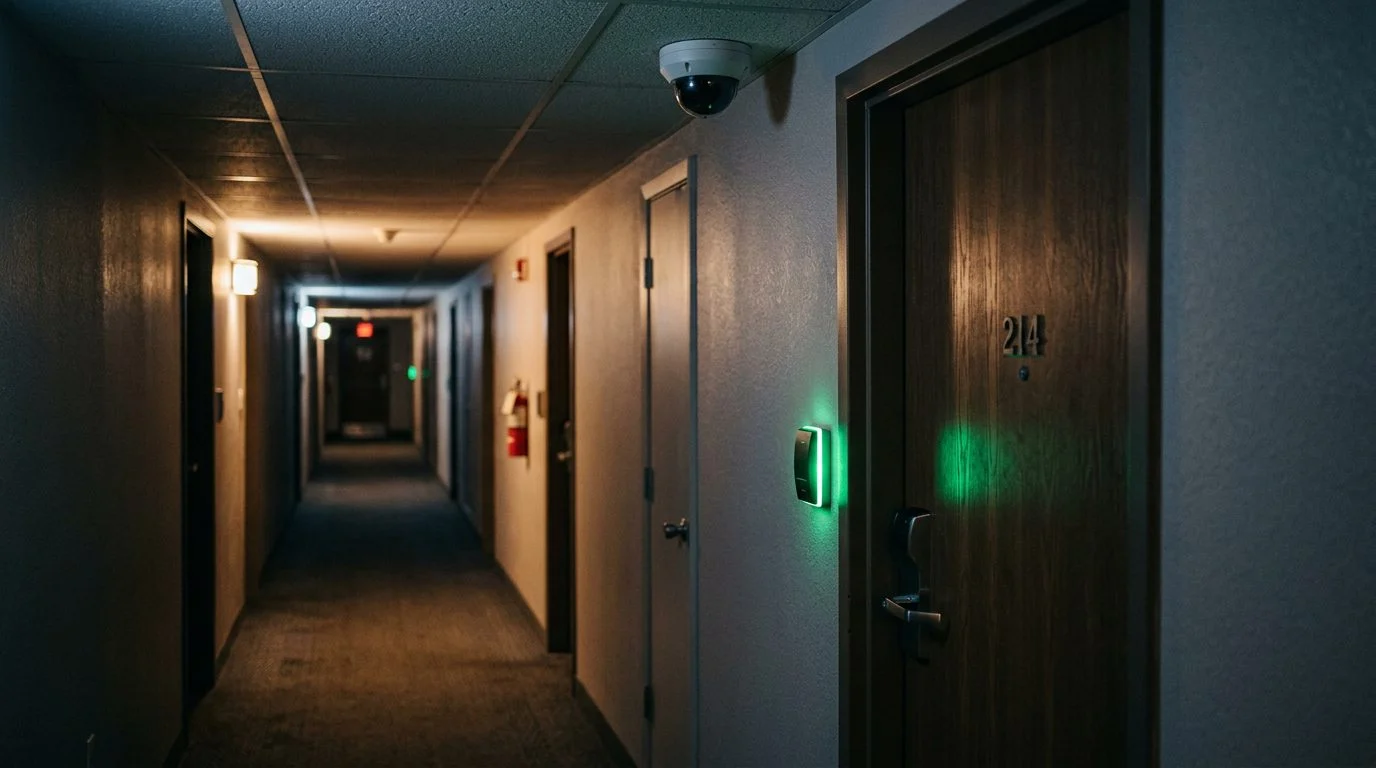
Negligent Security · Las Cruces
When a Property Owner Fails to Protect You From Foreseeable Crime
Property owners must use ordinary care to keep visitors reasonably safe. If a crime injured you on someone else's property, El Gringo Law can review what happened. Your initial consultation is free, confidential, and carries no obligation to continue.
By Josh Wood · Published October 31, 2026
Negligent security is a claim that a property owner or manager failed to protect people from a crime that was foreseeable. In New Mexico, the key question is whether the owner used ordinary care, given what it knew or should have known. This page explains how that works for people hurt in Las Cruces and Doña Ana County.
What Is Negligent Security in New Mexico?
Negligent security means a property owner did not take reasonable steps to keep people safe from crime. New Mexico’s jury instructions say a property owner owes a visitor a duty to use ordinary care to keep the premises safe (UJI 13-1309 NMRA). The same instructions say the owner’s duty to protect visitors arises from a foreseeable risk that a third person will injure a visitor, and the amount of care required increases as that risk of danger increases (UJI 13-1320 NMRA).
That means the attacker is not the only question. The owner’s own care is also examined. Did the owner take reasonable steps, given the risks it could see?
Foreseeability is the central idea. Repeated complaints about broken locks, dark walkways, or unmonitored gates can also show the owner knew of a risk. Warnings from tenants, guests, or employees matter for the same reason.
If you were hurt in an attack on a Las Cruces property, you may have a claim, and our team can talk through your facts with you. Talk it through with our team — the first consultation is free, confidential, and carries no obligation.

The Four Things a Negligence Claim Generally Must Show
Under Herrera v. Quality Pontiac, a negligence claim generally requires a duty owed by the defendant to the plaintiff, a breach of that duty, which is typically based on a standard of reasonable care, and that breach being a proximate cause and cause in fact of the plaintiff’s damages. New Mexico courts describe them as duty, breach, causation, and damages (Herrera v. Quality Pontiac). Each one must be connected to the facts of your case.
- Duty. The owner or manager owed the injured person a duty of care on the premises.
- Breach. The owner’s security fell short of what reasonable care required. Lighting, locks, gates, cameras, patrols, and staffing are common questions.
- Causation. The security failure must connect to the attack. The failure does not have to be the only cause, but it must be a real cause of the injury.
- Damages. The injured person suffered real harm, such as medical bills, lost income, and pain and suffering.
Your own fault does not automatically end a claim. In cases where there is no apportionment of negligence among defendants or non-parties, New Mexico reduces the total damages by the percentage of the injured person’s own negligence (UJI 13-2218 NMRA). Partial fault lowers the award. It does not erase the claim.
Where Negligent Security Cases Arise in Las Cruces
Negligent security cases in Las Cruces often start at everyday places. Apartment complexes, parking lots, shopping centers, hotels, and bars are common settings. Each one raises different questions about who was responsible for safety.
In an apartment complex, the questions often involve gates, locks, and lighting in shared areas. In a parking lot, they often involve lights, cameras, and whether anyone patrolled. At a bar or hotel, staffing and past incident reports can matter. When you think through your own incident, these questions can help:
- Did the lights work, and were dark areas already known?
- Were gates and locks maintained or repaired?
- Were cameras working, and was anyone monitoring them?
- Was security staff present at the time of the attack?
- Had similar incidents been reported to management before?
Answers to these questions help show what the owner knew and what it did about it.
What to Do After an Attack on Someone’s Property
Start with medical care, even when injuries seem small. Keep every record, bill, and referral from your treatment. Those records prove the harm and connect it to the attack.
Protect the evidence next. Most of these steps take only a few minutes:
- Report the attack to police and ask for the report number.
- Photograph the scene once it is safe. Capture lighting, locks, gates, camera positions, and signs.
- Write down what you remember, including times, names of employees or witnesses, and the conditions of the area.
- Save receipts, pay stubs, and any letters from the property owner or its insurer.
- Be careful about giving recorded statements to an insurer before you talk with a lawyer.
Early notes matter because memories fade and conditions change. A parking lot that is lit today may not look the same next week.
Time Limits to Keep in Mind in New Mexico
Deadlines can pass while a person is still recovering, so timing matters early. For an injury to the person or reputation of any person, NMSA § 37-1-8 sets a three-year limit for bringing an action. That is the general rule for injury claims in New Mexico.
Wrongful death claims follow a different provision. Under NMSA 1978, § 41-2-2, a wrongful death action must be brought within three years after the cause of action accrues (NMSA 1978, § 41-2-2 — three years from the date of death). The cause of action accrues as of the date of death. If a person’s death is caused by another’s wrongful act, neglect or default that would have entitled the injured person to maintain an action and recover damages had death not ensued, the person or corporation that would have been liable is liable to an action for damages, notwithstanding the death of the person injured (NMSA § 41-2-1).
The timing for your case depends on its facts, so it helps to review it early.
How El Gringo Law Helps Clients Facing Negligent Security Claims
El Gringo Law handles negligent security claims. The firm also handles premises liability, wrongful death, sexual assault, and catastrophic injury matters. People in Las Cruces and Doña Ana County may contact the firm to discuss their situation.
Josh Wood is the responsible lawyer for this page’s content. He is licensed in New Mexico and Arizona. Our team supports clients through the process. You can reach the firm at elgringolaw.com.
You can ask about case costs and expenses during your first consultation with our team, which is free, confidential, and comes with no obligation to continue.
The first consultation is free, confidential, and carries no obligation to continue.
Not sure what your next step is?
Talk it through with our team — the first consultation is free, confidential, and carries no obligation.
Talk With a Negligent Security Lawyer About Your Situation
Many questions come up after an attack on someone else’s property. Who was responsible for lighting and locks? Were earlier crimes reported to management? Those answers shape what comes next.
Can a property owner be liable for a crime on its property?
Yes, a property owner may be responsible to a visitor injured by a third person when it breaches the duty to use ordinary care to keep the premises safe for use by a visitor, including against foreseeable crime. The answer depends on the owner’s own conduct and what it knew.
How long do I have to file a negligent security claim in New Mexico?
Under NMSA § 37-1-8, the limit for an action for an injury to the person or reputation of any person is three years. Wrongful death claims must be brought within three years after the date of death (NMSA 1978, § 41-2-2 — three years from the date of death).
Can I still recover if I was partly at fault?
Yes. In cases where there is no apportionment of negligence among defendants or non-parties, New Mexico reduces your total damages by your percentage of negligence, so partial fault lowers the award rather than erasing it.
If you were hurt in an attack in a Las Cruces parking lot or apartment complex, you may have a claim. You can contact us through our form, and we can talk through your facts with you.
How El Gringo Law Approaches a Negligent Security Matter
We look at the property's own conduct
We review what the owner or manager knew, what they did, and what they failed to do to address known risks on the property.
We examine prior incidents and warnings
Earlier crimes, complaints, and repair requests can help show whether a risk was foreseeable.
We focus on protecting your interests
Our team works to understand your injuries, your losses, and the steps that would help you move forward.
You stay in control of your decisions
Your consultation is confidential. You decide whether to continue after we talk with you.
Before You Speak With an Insurer or Property Representative
Insurance adjusters and property managers may ask for recorded statements or early agreements. Consider speaking with a lawyer before you give a statement about what happened or sign anything.
Facts That Often Matter in Negligent Security Cases
Prior crimes on the property
Reports of earlier assaults, break-ins, or disturbances can show that the risk was known.
Lighting, locks, and gates
Broken lights, unsecured entrances, and malfunctioning gates can affect how safe a property is for visitors.
Security staffing and patrols
The presence, training, and response of security personnel may be relevant to what the owner did.
Warnings and maintenance requests
Tenant complaints, employee reports, and ignored repair requests can help show what the owner was aware of.