Albuquerque · Spinal Cord Injuries from Ladder Falls
Hurt in a ladder fall? Talk with a New Mexico injury lawyer who focuses on serious spinal cord injuries.
A fall can change a family's life in a moment. El Gringo Law can help you understand who may be responsible and what your options look like.
By Josh Wood · Published November 11, 2026
A fall from a ladder can change a life in an instant. If you were hurt on property you did not own, you may be wondering whether you have a claim.
A visitor hurt in a ladder fall on someone else’s property may have a claim when the owner or occupier did not use ordinary care to keep the premises safe for use by the visitor. If you need a lawyer for a spinal cord injury from a ladder fall in Albuquerque, this page explains the key steps. It covers who may be responsible, what a claim can include, and what the first consultation involves.
What a Spinal Cord Injury From a Ladder Fall Means
A spinal cord injury damages the spinal cord or the nerves that run through the spine. The spinal cord carries signals between the brain and the rest of the body. Injuries can affect movement, feeling, bladder and bowel control, and breathing.
The Reeve Foundation’s spinal cord injury facts explain the difference between complete and incomplete injuries, and the levels of injury.
Falls are a common cause. The Virginia Department of Health training page lists falls and motor-vehicle crashes as common causes. It also notes the cervical spine is especially vulnerable. A fall from a ladder, scaffold, or stairs can injure the neck or back. Prompt medical care protects your health and creates the records a claim relies on.
This page is for people hurt on property they did not own. It is also for spouses, parents, and adult children now managing care, work, and home changes.
When a Property Owner May Be Responsible for a Fall
A property owner or occupier may be responsible when it fails to use ordinary care to keep visitors safe. New Mexico’s visitor duty instruction, UJI 13-1309 NMRA applies in all cases where a visitor claims injury from an unreasonably dangerous condition, including open and obvious ones, but it should not be given if the court finds that the visitor’s negligence in encountering a known or obviously dangerous condition was unforeseeable as a matter of law.
Under UJI 13-1318 NMRA, an owner is charged with knowing conditions a reasonable inspection would have revealed. The owner is also charged with conditions its own people caused.
Common hazards in ladder cases include:
- Unstable or damaged ladders
- Missing guardrails
- Wet or damaged floors
- Poor lighting
- Equipment left unsecured
- Work areas with no warning signs
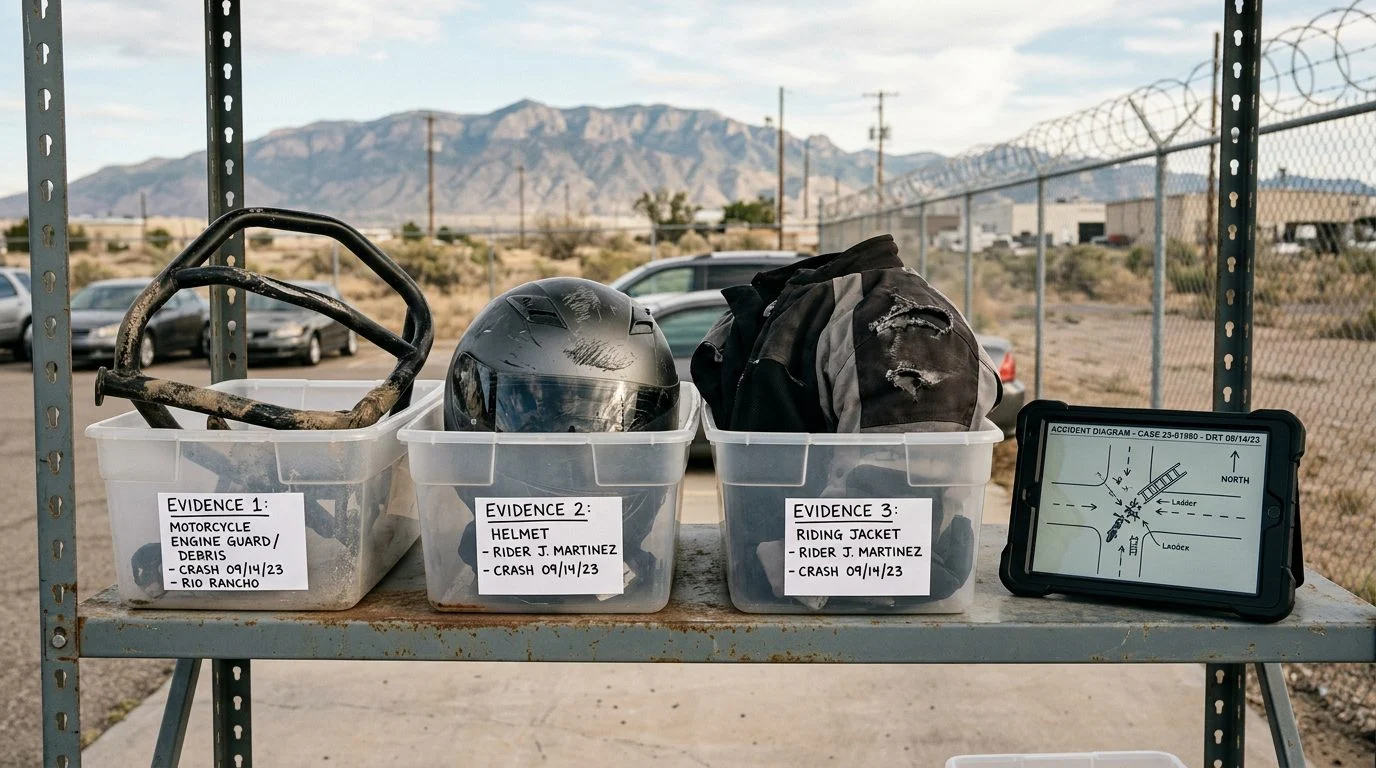
Fact questions often decide a claim. Who owned, supplied, or maintained the ladder? What work was under way? How long was the hazard there? Keep the ladder if you can, along with photos, incident reports, and witness names.
Two fault rules also shape a claim. If you share some fault, New Mexico’s comparative negligence rule, UJI 13-2218 NMRA, reduces your damages by your percentage of fault. If more than one party contributed, NMSA 1978, § 41-3A-1 generally makes each defendant liable only for its share of total fault, with listed exceptions.
What a Spinal Cord Injury Claim Can Cover
A claim looks at the costs and losses the injury creates now and in the future.
- Medical costs, such as emergency care, surgery, hospital stays, rehabilitation, medicine, and equipment
- Lost income, including time off for appointments and recovery, and any lasting limit on your ability to work
- Future care a doctor documents, such as therapy, attendant care, and adaptive equipment
- Home and vehicle changes, such as ramps, bathroom changes, or an accessible van (home modifications and attendant care)
- Bladder and bowel care needs that follow the injury
- Care that family members give at home
A spouse or close family member may have a separate claim.
The value of a claim depends on medical records, the injury’s severity, and the evidence. No amount can be predicted before those are reviewed. To learn more about the factors involved, read about settlement factors for spinal cord injuries.
How a Spinal Cord Injury Claim Works, Step by Step
A claim usually moves from a first conversation to evidence work, insurance talks, and, if needed, a lawsuit.
- Consultation. You describe the fall, your injuries, and any letters you have received.
- Evidence. We work to keep the ladder, scene photos, incident reports, and medical records. We may ask the property owner or insurer in writing to keep key items.
- Medical review. We coordinate with your treating providers and document current and future care needs.
- Insurance talks. We present the claim and review any offer with you before you decide anything.
- Lawsuit, if needed. A case can involve discovery, depositions, mediation, and possibly trial. Timing varies from case to case.
Deadlines matter. New Mexico law sets three years for actions for an injury to a person under NMSA 1978, § 37-1-8. Early contact gives your case more time to be prepared.
What the Free First Consultation Covers
The first consultation is free, confidential, and carries no obligation to continue.
You do not need every document before you call. Bring what you have:
- The date and location of the fall
- The property owner’s name, if you know it
- Medical records and bills
- Photos, texts, and witness names
- Any letters from insurers
- Pay records or notes about missed work
During the consultation, we listen to your account and identify the facts that matter. We explain the steps in plain words. You decide whether to move forward.
Why Work With El Gringo Law on a Spinal Cord Injury Claim
El Gringo Law handles premises liability and catastrophic injury cases, including spinal cord injuries. The firm also handles car accidents, trucking accidents, negligent security, wrongful death, amputations, and burn injuries.
Josh Wood is the responsible lawyer for this page. He is licensed in New Mexico and Arizona. Our lawyers and our team, which includes support staff, handle the day-to-day work on each matter. Support staff are not lawyers.
Our process follows the steps above. We explain each step before it happens and ask for your decisions at the points where they matter.
Every case is different, and past results do not ensure a similar outcome.
Phone: (505) 207-5000
Questions Injured Readers Ask Before Calling
Can I still have a claim if I was using my own ladder?
Possibly, since who owned, supplied, or maintained the ladder matters. Your own share of fault reduces damages under New Mexico’s comparative negligence rule.
Will I have to go to court?
Some claims settle without a lawsuit. Others need one, and we talk through the options with you first.
What should I do with an insurance adjuster’s letter?
Bring the letter to your consultation. We can review it with you before you reply.
How much is my claim worth?
No amount can be predicted until medical records and evidence are reviewed.

Talk With El Gringo Law About Your Ladder Fall Injury
If a ladder fall on someone else’s property has left you or a family member facing a spinal cord injury, call (505) 207-5000 or use our contact form to schedule your first consultation.
How our team approaches a ladder fall case
Your recovery comes first
Medical care and rehabilitation come first. We work to understand your injuries and your long-term needs so your case reflects them.
Careful review of the facts
Who owned, supplied, set up, or maintained the ladder can matter. We look closely at the equipment, the location, and the records.
Direct conversations
Josh Wood and our team explain each step in plain language, so you always know what is happening and why.
Focused on serious injuries
El Gringo Law focuses on spinal cord injuries and other catastrophic injuries, and on the families affected by them.
Preserve the evidence
Keep the ladder and any related gear as they are, and do not repair or throw them away. Save photos of the scene, the ladder, and your injuries, along with any witness names and medical paperwork.
What to bring to your free consultation
Medical records
Hospital discharge notes, imaging reports, and rehabilitation plans help us understand the injury.
Details of the fall
Where it happened, who was there, and what the ladder looked like before and after.
Photos and messages
Pictures of the scene and texts or emails about the work, property, or the fall.
Questions for us
Write down what matters most to you, including questions about your work, family, and daily life.