Spinal Cord Injury | Albuquerque
Hurt in a Stair Fall? Talk With El Gringo Law About Your Spinal Cord Injury
A fall on the stairs can change your daily life in seconds. Our team listens first, takes time to understand what happened, and explains your next steps in plain language.
By Josh Wood · Published November 12, 2026
If a fall on stairs or a balcony left you or someone you love with a spinal cord injury, you may have a claim against the party responsible for that property. These falls are usually handled as premises liability claims, and filing deadlines can be short, so timing matters. Here is how these claims work, what they can cover, and what to do first.
What a Spinal Cord Injury From a Stairs or Balcony Fall Involves
A spinal cord injury is damage to the spinal cord or the nerves in the spine. The effects can include loss of movement, loss of feeling, bladder and bowel problems, and trouble breathing. The Christopher & Dana Reeve Foundation explains the causes and effects of these injuries, including complete and incomplete injuries.
Doctors call an injury complete when signals below the injury are fully blocked. They call it incomplete when some signals still get through. Where the injury sits on the spine matters too.
Falls are one of the common causes. The Virginia Department of Health spinal cord injury training lists falls and motor-vehicle crashes among common causes. Because these injuries often need long-term care, El Gringo Law handles them as catastrophic injury matters. Medical care often involves many providers, and the records from each one matter to the claim.
This page is for injured adults, and for spouses, parents, and adult children of someone hurt in a fall on a staircase, balcony, deck, or walkway in New Mexico.
If a fall on stairs or a balcony left you with a spinal cord injury, you may have a claim, and El Gringo Law can talk through it with you. Talk it through with our team — the first consultation is free, confidential, and carries no obligation.
When a Stairs or Balcony Fall Becomes a Premises Liability Claim
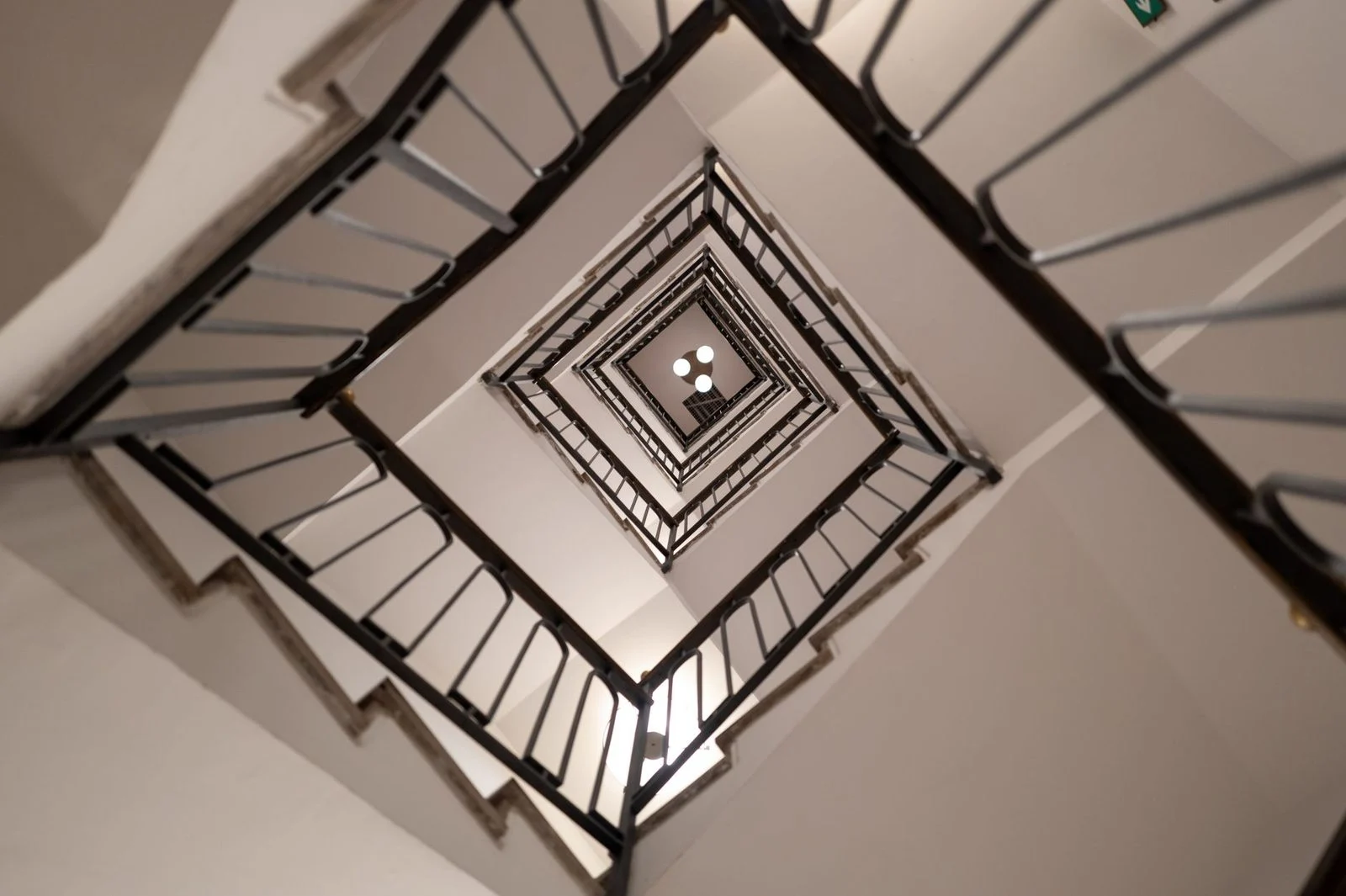
A stairs fall becomes a premises liability claim when a dangerous condition on the property helped cause the fall and the responsible party failed to keep the area safe. Common conditions include:
- Missing, loose, or too-low handrails
- Uneven, cracked, or broken steps
- Rotted or broken balcony boards
- Low or missing guardrails
- Poor lighting on stairs or walkways
- Slick or defective surfaces
New Mexico’s model jury instruction says an owner or occupant owes a visitor a duty to use ordinary care to keep the premises safe, per UJI 13-1309. That duty applies even when a danger is known or obvious, unless the court determines as a matter of law that the visitor’s negligence was unforeseeable, in which case this instruction should not be given. The owner is also charged with knowing about conditions a reasonable inspection would reveal, or conditions the owner or its employees caused, per UJI 13-1318.
Questions that often decide these cases include who controlled the property, whether a building or safety code was violated, whether anyone reported the problem, and what the maintenance records show.
A claim generally needs a duty, a breach of that duty measured by reasonable care, and a breach that was a proximate cause of the injury. A proximate cause need not be the only cause. Herrera v. Quality Pontiac sets out those elements.
When more than one party shares fault, New Mexico generally makes each party pay only its own share, with listed exceptions. See NMSA 1978, § 41-3A-1.
The Act does not shield public employees from liability for bodily injury caused by their negligent operation or maintenance of a building, per NMSA 1978, § 41-4-6. NMSA 1978, § 41-4-6 reads: “The immunity granted pursuant to Subsection A of Section 41-4-4 NMSA 1978 does not apply to liability for damages resulting from bodily injury, wrongful death or property damage caused by the negligence of public employees while acting within the scope of their duties in the operation or maintenance of any building, public park, machinery, equipment or furnishings.”
Liability depends on the facts of each fall. A rental, apartment, or business property can involve different responsible parties than a private home.
What a Spinal Cord Injury Claim Can Cover
A spinal cord injury claim can seek compensation for the medical, personal, and financial losses the fall caused. Common categories include:
- Past and future medical care, surgery, and rehabilitation
- Medications and medical equipment
- Wheelchairs and adaptive equipment
- Home changes such as ramps, bathroom modifications, and lifts
- In-home attendant care
- Vehicle modifications
- Lost wages and lost earning ability
- Pain and suffering
Future costs are usually estimated with help from medical and vocational professionals. The value of a claim turns on the injury, the medical record, and the facts of the fall.
If the fall was fatal, a wrongful death claim may be possible. Under NMSA 1978, § 41-2-1, the party who would have been liable had the person lived can be sued for damages. Under NMSA 1978, § 41-2-2, that action must be brought within three years after the cause of action accrues, which is the date of death (NMSA 1978, § 41-2-2 — three years from the date of death).
Steps to Take After a Stairs or Balcony Fall
The first steps are medical care, evidence, and an early look at deadlines.
- Get emergency medical care first, and follow your treatment plan. Gaps in care can be used to question the injury.
- Photograph the stairs, railing, balcony boards, and lighting before anything is repaired.
- Write down the names of witnesses, and keep any incident report.
- Save texts and emails with the landlord, property manager, or owner.
- Ask for the property’s maintenance and repair history and any past complaints. Those records often show what the owner knew.
- Keep a written log of symptoms, appointments, missed work, and out-of-pocket costs.
A typical claim moves through records gathering, medical stabilization, demand and negotiation, and a lawsuit if a fair resolution is not reached. Each stage moves at the pace of the medical course.
New Mexico’s general time limit for an injury to a person is three years, under NMSA 1978, § 37-1-8. Claims against a government entity or public employee move faster. A lawsuit generally must start within two years after the date of the occurrence that caused the loss, injury or death under NMSA 1978, § 41-4-15, except that a minor under the full age of seven years has until his ninth birthday in which to file. For a claim for damages from the state or any local public body, written notice is generally due within ninety days after the occurrence under NMSA 1978, § 41-4-16, or within six months after the occurrence of the injury that resulted in death for a wrongful death claim, unless the entity already had actual notice of the occurrence; time, up to ninety days, during which the injured person is incapacitated from giving notice because of the injury does not count.
Why Injured Clients in Albuquerque Contact El Gringo Law
El Gringo Law represents people hurt in car, truck, and premises accidents in New Mexico, including Albuquerque and Bernalillo County. A stairs fall lawyer’s first job is to understand the injury and the property facts, and our team works on both.
Josh Wood is the lawyer responsible for this page, and he is licensed in New Mexico and Arizona. The firm has more than one lawyer, along with support staff. Our team keeps clients informed as the case moves forward and works with medical providers and vocational professionals when a case calls for it.
Every case is different, and results in other cases do not predict yours. For more on local claims, read Bernalillo County spinal cord injury lawsuits.
Frequently Asked Questions About Stairs and Balcony Fall Spinal Cord Injury Claims
What if I was partly at fault for the fall?
New Mexico uses comparative negligence, so your damages are reduced by your share of fault, per UJI 13-2218.
How long do I have to file?
Generally three years for injury claims, and shorter deadlines apply to government entities. Calling early gives your case more time for the steps above.
Who pays for the first consultation?
The first consultation is free, confidential, and with no obligation to continue.
Does a fall at a rental or apartment count?
It can. The landlord, property manager, or owner may share responsibility, based on who controlled the condition.
Do I need the property’s records before I call?
No. Photos, witness names, and medical records help, and the firm can request records during its investigation.
Not sure what your next step is?
Talk it through with our team — the first consultation is free, confidential, and carries no obligation.

Talk With El Gringo Law About Your Albuquerque Fall
You can start by contacting El Gringo Law about your fall and your injury while the time limits above are still open. If a stairs or balcony fall left you with a spinal cord injury, reach out through the contact form or start a chat, and our team will talk through your options with you. Josh Wood is the responsible lawyer for this page, and the firm’s website is elgringolaw.com.
How we can help after a stair fall
Free, confidential first consultation
Tell us what happened in a private conversation. The first consultation is free, confidential, and comes with no obligation to continue.
Lawyers and staff who answer your questions
Our lawyers and support staff keep you informed and make it easier to understand each step of a spinal cord injury claim.
Help gathering the facts
We can help you think through photos, medical records, incident reports, and witness details that may matter to your situation.
Focus on serious injuries
Our practice focuses on catastrophic injuries, including spinal cord injuries, so we can give your case the time it requires.
Keep these details if you can
Take photos of the stairs, handrail, lighting, and any debris, and write down the names of anyone who saw the fall. Save every medical bill and appointment note, and tell us about any symptoms, even if they seem minor.
Common reasons stair falls cause serious harm
Broken or loose handrails
A handrail that gives way or was never secured can turn a single misstep into a long fall.
Poor lighting
Dim or burned-out lights make step edges and landings hard to see, especially at night.
Worn or uneven steps
Cracked treads, loose boards, and uneven risers can cause a fall even for careful people.
Missing guardrails
Open stairwells and steep stairs without guardrails increase the chance of a fall from height.