Car Accident Injuries | New Mexico
When the Injury Is Hard to See, the Proof Still Matters
Josh Wood and the team at El Gringo Law help New Mexico car crash victims document injuries that don't always show up on a standard scan. Start with a free, confidential initial consultation, with no obligation to continue.
By Josh Wood · Published October 29, 2026
The Short Answer: No Single Injury Is Always the Hardest to Prove
What is the hardest injury to prove? No single injury is always the hardest. The difficulty comes from the kind of evidence an injury leaves behind and how well that evidence is written down.
Still, some injuries come up again and again in this question. Brain injuries and concussions, soft tissue injuries, chronic pain, and some spinal injuries are often described as hard to prove. What they share is that much of the proof comes from symptoms a person reports, not from one test that shows the damage.
You may be reading this while a family member is still recovering. You may also be fielding calls from an insurance adjuster and trying to figure out what they want. That is a lot to carry. You don’t need every answer today.
This page explains why some injuries are harder to document, what insurers often argue, and what helps build a strong record. It is general information, not advice about your specific case.
If you're helping a loved one with an injury that is hard to document after a crash, you don't have to sort out the medical and insurance questions alone; our team is ready to talk. Talk it through with our team — the first consultation is free, confidential, and carries no obligation.

Why Some Injuries Are Harder to Prove Than Others
Injuries are harder to prove when the evidence is mostly what the person feels. An X-ray showing a broken bone is an objective finding. Pain, dizziness, and fatigue are subjective symptoms, reported by the patient.
Objective findings include a fracture on imaging or a measured loss of strength. Subjective symptoms are real to the person living with them. But an insurer or a jury can’t test a feeling the way they can test a scan. That’s why the medical record matters so much.
A strong claim usually rests on several pieces working together. Those pieces include medical records from the first visit forward, the timing of the diagnosis, the treatment history, and the opinions of treating providers. A delay between the crash and the first medical visit can make the link harder to show.
Second, the crash must have caused it. The current New Mexico pattern jury instruction on proximate cause, UJI 13-305, asks whether the defendant’s conduct was reasonably connected as a significant link to the injury. The state’s uniform jury instruction adds that a cause need not be the only explanation. It must be reasonably connected as a significant link to the injury, as stated in UJI 13-305 NMRA.
Brain Injuries and Concussions: Symptoms That Do Not Always Appear on Scans
A concussion or mild traumatic brain injury can be real even when a standard scan looks clear. Because of this, the diagnosis often rests on symptoms and a clinical exam. Scans are one tool, not the whole picture.
Providers commonly write down headaches, trouble with memory or concentration, sensitivity to light or noise, dizziness, sleep changes, and mood changes. These notes become part of the proof. Each entry shows what the person reported and when.
Neurological evaluation and cognitive testing also matter. Follow-up visits show whether symptoms are changing, staying the same, or getting better. Missing those visits can leave a gap that an insurer will question.
The most useful habit is simple. Tell every provider about every symptom, even the ones that seem small. Describe them the same way each time, and let the provider record what you report.
Soft Tissue Injuries and Chronic Pain After a Car Accident
Soft tissue injuries and chronic pain are often hard to prove because they rarely show clearly on an X-ray. Soft tissue means sprains, strains, and damage to ligaments and muscles. These injuries can hurt a great deal without a visible fracture.
Pain that lasts past the usual healing time is harder to tie back to the crash. An insurer may argue that the pain comes from something else, such as age, work, or an old injury. The treating provider’s notes can show when the pain started, where it sits, what makes it worse, and how it changed.
Ongoing care creates a record over time. A pain-management or follow-up file can track flare-ups, medications, physical therapy progress, and limits at work or home. Those entries carry much more weight than a single visit.
Different providers may describe the same injury in different words. That is common. Still, it helps to give every provider the same accurate history. Consistency makes the record easier to read and harder to dispute.
Spinal Injuries: When the Proof Is Clearer and When It Takes Time
Spinal injuries are often documented with imaging, but some injuries take time to show their full effect. The spinal cord is protected by three layers of tissue. Cerebrospinal fluid (CSF, the fluid that cushions the cord) surrounds it, according to the NINDS spinal cord injury overview.
Injuries in the upper neck can affect breathing. The nerves there help control the diaphragm, the main muscle used to breathe, as explained by the NINDS spinal cord injury overview. That is one reason these cases get prompt, serious medical attention.
Partial injuries and disc injuries can have symptoms that change over weeks or months. Serial evaluations, meaning repeat exams and tests over time, help show how the injury is developing. The full picture may take longer to form.
The early emergency and hospital records are often central. They show what providers found at the time of the crash. If you’re managing a serious diagnosis, ask for copies of those records early, while the details are fresh.
How Insurers Argue Pre-Existing Conditions and Gaps in Treatment
Insurers often argue that symptoms were already there before the crash. They may also argue that a gap in treatment means the injury was not serious. These arguments are common, and they are answered with records, not assumptions.
For a pre-existing condition, prior medical history is the key. Tell your provider about past injuries and past care, even if they seem unrelated. A provider can explain whether the crash changed a condition that was already present.
Gaps can happen for ordinary reasons, like work schedules, childcare, or transportation. A written timeline helps explain them. Note the dates of each visit, the reason for any delay, and when symptoms changed.
New Mexico’s unfair claims practices statute lists not attempting in good faith to effectuate prompt, fair and equitable settlements of an insured’s claims in which liability has become reasonably clear as an unfair practice. New Mexico’s Section 59A-16-20 defines certain practices with respect to claims, by an insurer or other person, as unfair and deceptive and prohibits them when they are knowingly committed or performed with such frequency as to indicate a general business practice. These disputes are usually settled by medical evidence and documents, not by an insurer’s say-so.
Not sure what your next step is?
Talk it through with our team — the first consultation is free, confidential, and carries no obligation.
What Helps Build a Strong Record for a Hard-to-Prove Injury
A strong record starts with prompt care and grows with each visit. Good records take steady attention, but the steps are straightforward.
Get evaluated promptly. Describe every symptom, and keep your appointments. Follow the treatment your providers recommend, and keep copies of the appointment paperwork.
Keep a daily journal. Note how the injury limits work, sleep, driving, and family responsibilities. Short, dated entries are easy to add and useful later.
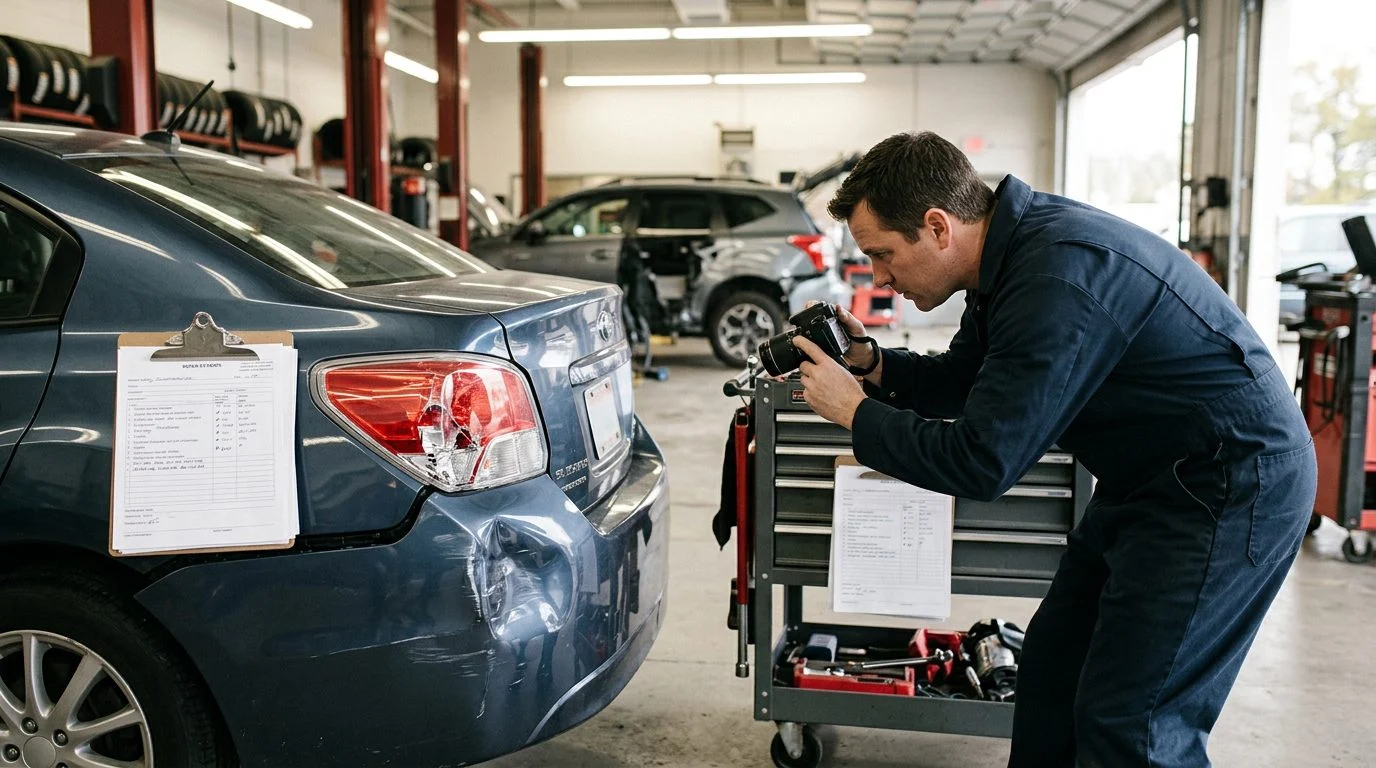
Preserve evidence from the scene. Save photos, witness names, vehicle damage records, and the police report number.
New Mexico has reporting rules for drivers. New Mexico’s Section 66-7-206 requires the driver of a vehicle, or the autonomous motor vehicle operator or autonomous commercial motor vehicle operator if applicable, involved in an accident resulting in bodily injury to or death of any person or property damage to an apparent extent of five hundred dollars ($500) or more to give notice of the accident immediately, by the quickest means of communication, to the police department if the accident occurs within a municipality, and otherwise to the office of the county sheriff or the nearest office of the New Mexico state police. For an autonomous motor vehicle operating without a human driver, the owner of that motor vehicle or person working on behalf of the vehicle owner shall be responsible for providing the notice. New Mexico’s Section 66-7-207 requires the driver of a vehicle involved in an accident resulting in bodily injury to or death of any person or total property damage to an apparent extent of five hundred dollars ($500) or more to forward a written report of the accident to the department of transportation within five days after the accident. For more detail, a checklist of first steps after a serious accident can help you stay organized.
Common Questions About Injuries That Are Hard to Prove
Most of these questions come down to how well the medical record matches the injury. The answers below are short and direct.
What is the hardest injury to prove?
No single injury is always the hardest. Difficulty comes mostly from the evidence available, such as symptoms without clear imaging.
What is the worst injury you can get in a car accident?
Severity is measured by long-term impact and medical findings, not one ranking. Spinal cord injuries, brain injuries, burns, and amputations usually call for the most extensive documentation.
What injuries have the longest recovery time?
Serious spinal, brain, and multi-part injuries often need extended treatment. Recovery timelines vary by person, so ask your providers what to expect.
Why do insurers focus on some injuries more than others?
Injuries without clear imaging findings are often where disputes begin. The proof rests more on symptoms and records in those cases.

Talk With Our Team About Your Situation
If you’re researching for someone you care about, you may be carrying their recovery and your own questions at the same time. That is a heavy load, and you don’t have to sort it all out at once.
If you want to talk through the injury, the accident, or the records you already have, please reach out to El Gringo Law. Our first consultation is free, confidential, and carries no obligation to continue.
Josh Wood is the lawyer responsible for this page’s content. He is licensed in New Mexico and Arizona. You can reach our team through the El Gringo Law contact form on our website.
We represent people in Santa Fe, Rio Rancho, Las Cruces, Bernalillo County, Sandoval County, Taos, and Farmington. Santa Fe readers can also find local information on our Santa Fe page.
How We Help Document a Hard-to-Prove Injury
Medical Records Review
We gather and organize treatment notes, imaging, and provider records so the full picture of your symptoms is clear.
Timeline of Symptoms
We help connect the crash to symptoms that appeared days or weeks later, with a consistent record of when and how they changed.
Daily-Life Impact
We document how the injury affects work, sleep, family, and activities, which helps show the real effect of the crash.
Clear Communication
Our team keeps you informed at each step and answers your questions in plain language.
Important: Report Symptoms to a Medical Provider
Some crash injuries, including soft-tissue, head, and spinal injuries, may take time to show symptoms. Getting checked by a medical provider soon after a crash supports your health and creates a record of your condition. If you notice new symptoms later, tell your provider right away.
Why Some Crash Injuries Are Harder to Prove
Symptoms Without Clear Imaging
Headaches, dizziness, neck pain, and nerve symptoms can be real even when a standard scan looks normal.
Delayed Onset
Pain or cognitive changes may appear days or weeks after the crash, which can make the link to the collision harder to see.
Pre-Existing Conditions
Prior injuries or health issues can complicate the picture, so careful records help separate what changed after the crash.
Limited Visible Evidence
Some injuries leave few marks, so detailed medical notes and your own account of daily life become especially important.