Spinal Cord Injuries | New Mexico
Bring These Items to Your Spinal Cord Injury Consultation
A few organized papers can help us understand your situation sooner. Here is what to gather before you call.
By Josh Wood · Published November 12, 2026
A spinal cord injury can turn life upside down fast. Many people reading this are recovering from one, or helping a parent, spouse or adult child who is. So what should you bring to a spinal cord injury lawyer consultation in New Mexico? Bring what you have. Medical records, crash or incident papers, insurance letters, work and expense records, and a written timeline help most. You don’t need a complete file to make the call.
Preparing for a Spinal Cord Injury Consultation in New Mexico
Bring the papers that show how the injury happened, what treatment followed, and what it has cost so far. The first meeting is a free, confidential initial consultation, with no obligation to continue. It’s a chance to talk through the facts, ask questions, and decide on next steps.
Partial information is normal. Many people arrive with a few discharge papers, a phone photo of a crash report, and a list of questions. Missing items are not a reason to wait. Name the gaps when you reach out, and say which records you still need to request. Early gaps are easier to fill.
If you want background first, read our New Mexico spinal cord injury lawyer page for an overview of how these cases work.
If you're gathering papers after a spinal injury, or helping someone who is, you don't have to sort through them alone; our team can talk them through with you when you're ready. Talk it through with our team — the first consultation is free, confidential, and carries no obligation.
Medical Records, Imaging, and Treatment Notes
Medical records are usually the most important papers you can bring. They connect the crash or incident to the injury and show its limits.
Bring these if you have them:
- Discharge summaries and emergency room or hospital records
- Surgery reports and imaging results, such as MRI and CT reports
- Rehabilitation, physical therapy, and occupational therapy notes
- Notes from doctors you’ve seen for follow-up visits
- A current list of medicines, providers, and upcoming appointments
Imaging and surgery reports show what doctors found. Therapy notes show which daily tasks remain hard. A current provider list helps the consultation move quickly. You can ask each provider for copies of records you don’t have. Bring what’s already on hand while you wait.
Crash or Incident Documents
Crash and incident papers show how the injury happened, which is often the first thing a lawyer asks about. Start with the crash report number, the officer’s name, and the agency that responded.
New Mexico sets reporting deadlines for these papers. A driver in a crash involving bodily injury or death, or total property damage to an apparent extent of $500 or more, must send a written report to the Department of Transportation within five days (NMSA § 66-7-207). An officer who investigates must forward a report within 24 hours after finishing the investigation. So a report may not be in your hands yet, and that’s fine.
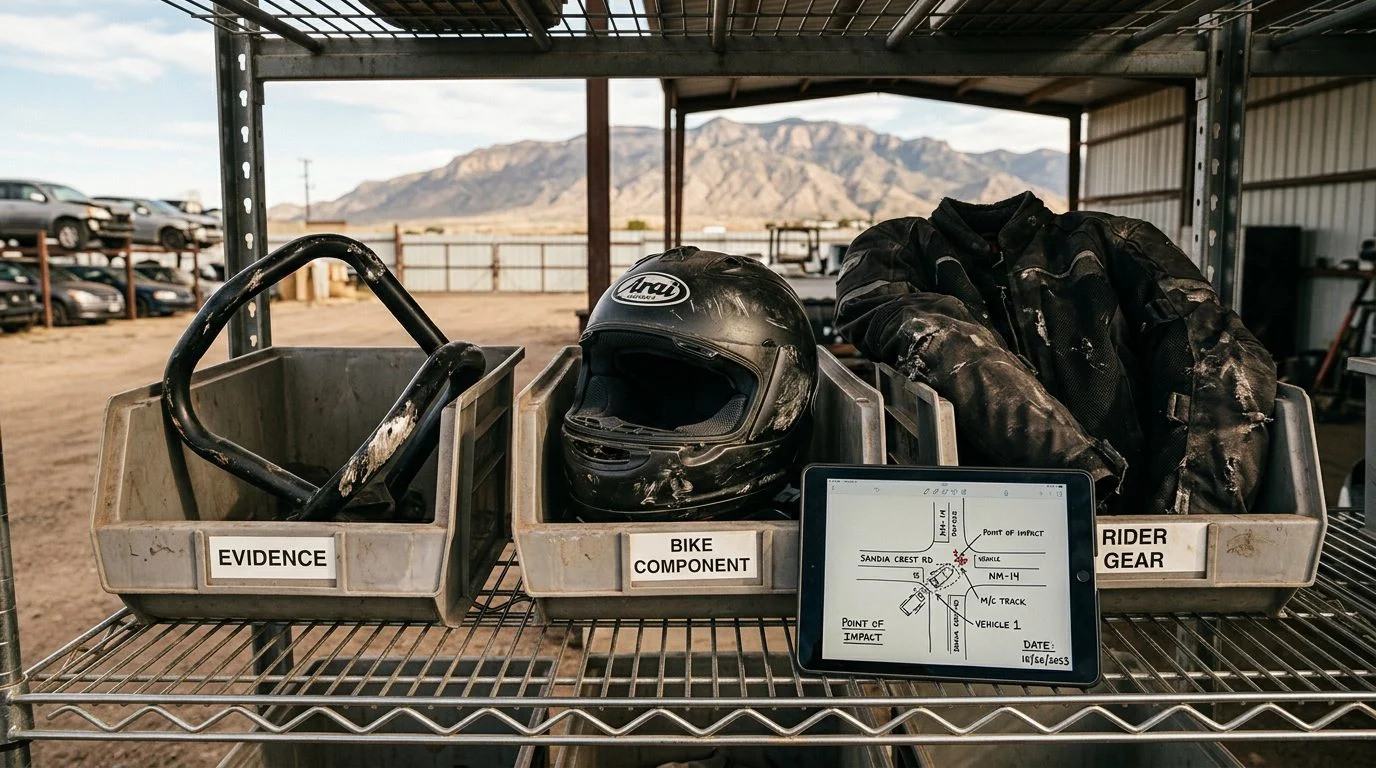
Also bring photos and video from the scene, witness names and phone numbers, dashcam footage, and towing or storage receipts. For a fall on someone else’s property, bring any incident report, photos of the spot, and any written notice you gave the owner or manager. New Mexico’s jury instruction says an owner or occupant owes a visitor ordinary care to keep the premises safe (UJI 13-1318 NMRA).
If a city, county, or state entity may be involved, tell us at the start. Under the Tort Claims Act, written notice for covered claims against a state or local public body is due within ninety days after the occurrence, unless the governmental entity had actual notice of the occurrence, and the statute does not count up to ninety days during which the injured person is incapacitated from giving notice by reason of injury; for a wrongful death claim, notice may instead be presented by or on behalf of the personal representative, a person claiming benefits of the wrongful death proceeds, or the consular officer of the foreign country of which the deceased was a citizen, within six months after the date of the injury that resulted in the death (NMSA § 41-4-16).
Insurance Letters, Claim Numbers, and Contacts
Insurance papers show who is involved and where claims stand. Bring the names of every insurer connected to the incident. That includes your own auto and health coverage and the other driver’s insurance carrier.
Gather these items:
- Claim numbers and adjuster names with phone numbers
- Letters, emails, and notes about any recorded statement requested
- Settlement offers and medical payment or benefit letters
- Any forms you signed
Keep copies of everything you receive, and store originals in a safe place. If an insurer asks for a recorded statement, talk it through before you give one. Read any offer or release closely before you respond to it. Write down the date of every call and the name of the person you spoke with.
Work, Income, and Out-of-Pocket Records
Income and expense records show what the injury has cost so far. Bring proof of what you earned before the injury and what you’ve paid since.
- Pay stubs, tax returns, or W-2 forms for the year before the injury
- Employer name, contact person, and phone number
- Letters about time missed, light-duty offers, termination, or disability claims
- Receipts and bills for medical care, medicines, equipment, and home changes
- Mileage to medical appointments
A simple running list helps even if you don’t have every receipt. For each cost, write the date, the amount, and what it paid for. Caregivers can keep their own list of trips and costs. Label any estimate as an estimate.
A Written Timeline and Symptom Log
A written timeline gives a consultation a clear starting point. Write down the date and time of the injury, what happened just before and after, and who responded.
Then track symptoms. Note when the first symptoms appeared and how they changed. Record effects on walking, grip, bladder, bowel function, sleep, and daily tasks. Keep the log going from the start of recovery, since it can show changes over time.
Some symptoms show up days or weeks later. Your situation may differ, so bring timing questions to the consultation. Write down any gaps in memory, and say when you don’t know a detail.
Not sure what your next step is?
Talk it through with our team — the first consultation is free, confidential, and carries no obligation.
Common Questions Before You Meet
What is the statute of limitations for a personal injury case in New Mexico?
For an action for an injury to the person, NMSA § 37-1-8 provides that the action must be brought within three years (NMSA § 37-1-8). When the clock starts can depend on the facts, so raise timing early.
Should I share prior injuries and past claims?
Yes. Share the full picture, including prior injuries, earlier claims, and past treatment. Complete answers help the consultation.
What about social media and recorded statements?
Avoid posting about the crash, your injuries, or your activities. Talk through any recorded statement before you give one.
Can a family member make a claim too?
Whether a family member may have a loss of consortium claim depends on the facts and the law that applies to each case.
Should I bring my own questions?
Yes. Write down questions about the process, timing, and costs, so none slip away during the meeting.
Talk With El Gringo Law About Your Situation
If you’re living with a spinal injury, or helping someone who is, this was not your choice, and the paperwork can feel endless. Reaching out is a sensible next step when you’re ready to talk. Josh Wood is the responsible lawyer for this page, which addresses New Mexico law only. Our team offers a free, confidential initial consultation, with no obligation to continue. Start through the El Gringo Law contact form or by chat, and bring whatever papers you have.
What to Bring to Your First Meeting
Medical records and imaging
Discharge summaries, treatment notes, MRI and CT reports, and any imaging files you have. Include records from therapy and rehabilitation.
Accident and injury details
Police or crash reports, photos of the scene and your injuries, and names and contact details of witnesses if you have them.
Bills and out-of-pocket costs
Hospital and provider bills, prescription receipts, mileage to appointments, and any equipment or home-modification costs.
Insurance and work information
Auto, health, and property policy information, any letters from insurers, and records of missed work with pay stubs or employer contact details.
Before You Talk to an Insurance Adjuster
Consider speaking with a lawyer before you give a recorded statement or sign insurance forms or medical releases. Bring any papers you have received so we can review them with you.
How Our Team Prepares With You
We organize your records
Our team helps sort medical, billing, and insurance papers so nothing important is left out.
We track timing early
We raise questions about deadlines and important dates at the start so you know what to plan for.
We keep you informed
You can ask questions at any stage, and we explain each step in plain language.
We focus on the full picture
Spinal cord injuries affect daily life, work, and family. We look at the long-term impact with you.
Ready to talk?
Your first consultation is free, confidential, and comes with no obligation to continue. Call or send a message to El Gringo Law, and Josh Wood or our team will respond.