Albuquerque · Bernalillo County · Wrongful Death
Lost a loved one in a truck crash? Start with a clear plan.
El Gringo Law represents New Mexico families after fatal trucking accidents. Read this guide to understand how a wrongful death lawsuit works, then talk with our team about your family's situation.
By Josh Wood · Published November 5, 2026
An Albuquerque truck accident wrongful death lawsuit lets a family seek damages after a person dies because someone else’s wrongful act or neglect caused the death. These cases often involve more parties and more records than a crash between two cars. This page explains who can file, what a claim can cover, how the process moves, and what makes truck cases different. El Gringo Law represents personal injury clients in New Mexico.
What a Wrongful Death Claim Is
A wrongful death claim is a lawsuit brought after a death caused by another person’s wrongful act, neglect, or default. Under New Mexico’s wrongful death statute (NMSA § 41-2-1), when a wrongful act, neglect or default causes a person’s death, and the act would have entitled the injured person to maintain an action and recover damages had death not ensued, the person or corporation that would have been liable had death not ensued shall be liable to an action for damages, notwithstanding the death of the person injured.
A cyclist struck and killed by a driver, a commercial truck, or a dangerous road condition may give rise to this kind of claim. Families should keep two ideas apart. Wrongful death covers the losses the family suffers because of the death. A separate claim may exist for the injured person’s own harm before death. Which claims apply turns on the facts of the crash.
Cases involving a cyclist often turn on the crash report, witness accounts, and roadway conditions. Our team reviews those details with the family to sort out which claims fit.
If your family lost someone in a crash involving a truck or car in Albuquerque, our team can talk through the next steps with you whenever you're ready. Talk it through with our team — the first consultation is free, confidential, and carries no obligation.
Who Can Bring a Wrongful Death Claim in New Mexico
In New Mexico, the personal representative of the person who died brings the wrongful death action. The action must be brought by and in the name of the personal representative of the deceased person (NMSA § 41-2-3).
The same statute sets who receives any money from a judgment. The proceeds are not liable for the decedent’s debts, provided the decedent has left a spouse, child, father, mother, brother, sister or child or children of the deceased child. Under Subsections A through E of NMSA § 41-2-3, the proceeds go to the following family members, in this order:
- A surviving spouse, if there is no child.
- A spouse and a child or grandchild: half to the spouse, and half to the children and grandchildren.
- No spouse, but a child or grandchild: to the children and grandchildren.
- A minor who was unmarried and had no children: equally to the father and mother, or to the surviving parent if either of them is dead.
- If none of those people survive, to a surviving brother or sister.
If no personal representative has been appointed yet, that is the first step to handle. Ask about it early, because the statute ties the lawsuit to that role.
Some close family members may also have a loss of consortium claim, which covers the loss of a close relationship. Loss of consortium damages result from the wrongful injury or death of someone in a sufficiently close relationship to the loss of consortium claimant, and such damages belong to the loss of consortium claimant and not to the injured person or the decedent’s estate (Thompson v. City of Albuquerque).
A crash can involve people and witnesses from across Bernalillo County and Sandoval County, including Rio Rancho. Families in Santa Fe and Las Cruces can also bring their questions to our team.
Albuquerque Truck Accident Wrongful Death Lawsuits
A crash with a commercial truck usually involves more parties and more records than a crash between two cars. Trucks are heavier, have larger blind spots, and need more distance to stop. These differences can affect who may share responsibility.
A truck crash can involve the driver, the motor carrier that operated the truck, and sometimes a company that leased or maintained it. The answer comes from who controlled the truck and the trip.
Federal rules require motor carriers, except private motor carriers of passengers (nonbusiness), to make drivers record their duty status for each 24-hour period. Under the federal rule, a motor carrier must install and require each of its drivers to use an electronic logging device (ELD) to record duty status; manual paper grid records are allowed only in limited cases (49 CFR 395.8). These records can be time-sensitive, so early requests matter.
Under 49 CFR 382.303, post-accident testing is required only in the circumstances the regulation specifies, and it is to be done as soon as practicable following the occurrence. If an alcohol test is not administered within two hours following the accident, the employer must prepare and maintain on file a record stating the reasons the test was not promptly administered (49 C.F.R. § 382.303(d)(1)). After eight hours, the employer must cease attempts to administer an alcohol test, and after 32 hours, it must cease attempts to administer a controlled substances test.
New Mexico describes negligent entrustment as a claim that requires three things. The company entrusted its vehicle to the driver. It knew or should have known the driver was incompetent. And that incompetence caused the injury (DeMatteo v. Simon).
The driver’s conduct after the crash also matters. A person who fails to stop, or to meet the statute’s requirements, after a crash that results in great bodily harm or death is guilty of a fourth degree felony, and a person who knowingly does so is guilty of a third degree felony (NMSA 1978, § 66-7-201).
What a Wrongful Death Claim Can Cover
A wrongful death claim seeks damages for the family’s losses from the death. A jury decides the amount if the case goes to trial.
The jury in such an action may give compensatory and exemplary damages that it deems fair and just, taking into consideration the pecuniary injury resulting from the death to the surviving party entitled to the judgment and the mitigating or aggravating circumstances attending the wrongful act, neglect or default (NMSA § 41-2-3). Compensatory damages pay for the loss. Exemplary damages are extra damages meant to punish. The jury also weighs mitigating and aggravating circumstances of the wrongful act.
New Mexico follows pure comparative negligence, so shared fault does not bar a claim entirely (Scott v. Rizzo). The jury assigns a percentage of fault to each party. In cases where apportionment of negligence among defendants or non-parties is an issue, each defendant’s percentage is then multiplied by the total damages (UJI 13-2219 comparative negligence instruction).
New Mexico applies several liability, with exceptions. Where several liability applies, a defendant who establishes that another person’s fault is a proximate cause of the plaintiff’s injury is liable only for the portion of the total dollar damages awarded to the plaintiff that equals the ratio of that defendant’s fault to the total fault attributed to all persons, including plaintiffs, defendants and persons not party to the action (NMSA § 41-3A-1).
How the Process Works, Step by Step
A wrongful death case usually starts with a conversation about the crash. Then it moves through investigation, a review of responsible parties, and either settlement talks or a lawsuit.
- Free first consultation. El Gringo Law offers a free, confidential first consultation with no obligation to continue. You share the crash details and the names of the people affected.
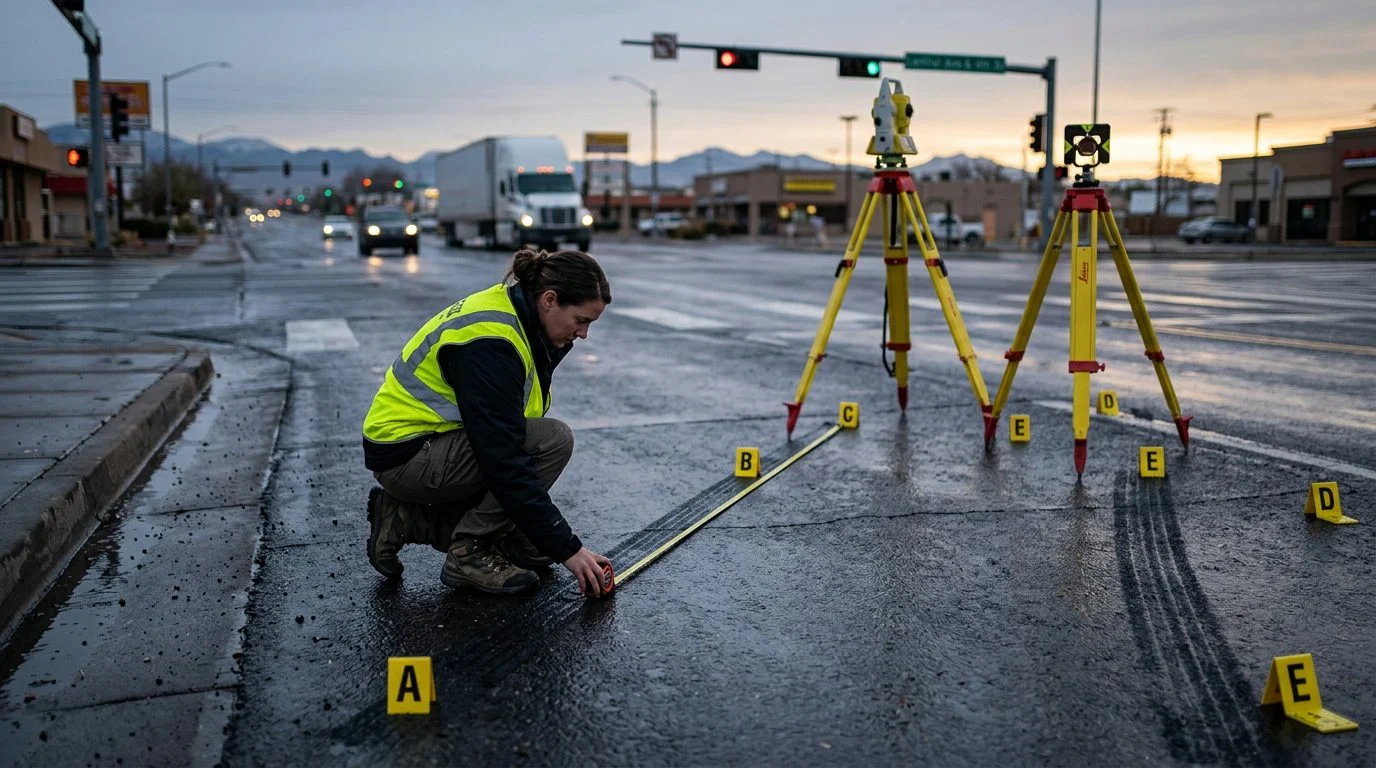
- Early investigation. The firm looks at the police report, witness contacts, crash scene information, and vehicle and roadway records.
- Finding responsible parties and insurance. This can include the driver, the trucking company, and insurance tied to the truck.
- Choosing a path. The family and the firm discuss whether settlement talks, a lawsuit, or both fit the facts.
- Filing suit if needed. An Albuquerque truck accident wrongful death lawsuit must be filed within the time limit set by statute. The questions below cover that limit.
Timing varies from case to case. The firm may advance court costs and litigation expenses. Those advances are repaid only from a recovery. If there is no recovery, you may be responsible for court costs and litigation expenses, as the written fee agreement states.
Why Families Contact El Gringo Law
El Gringo Law represents personal injury clients in New Mexico, primarily people hurt in car accidents. The firm also handles trucking accidents, wrongful death, catastrophic injuries, and premises liability claims.
Josh Wood is the responsible lawyer for this page. He is licensed in New Mexico and Arizona. Our lawyers and our team work with families on these cases. Our team includes assistants and office staff.
Contact: Josh Wood, El Gringo Law, through the firm’s contact page, where you can submit a contact form or start a chat.
Not sure what your next step is?
Talk it through with our team — the first consultation is free, confidential, and carries no obligation.
Common Questions About Truck and Wrongful Death Claims
Short answers to the questions families ask most often are below.
Can a family still sue if the person who died was partly at fault?
Yes. New Mexico follows pure comparative negligence, so shared fault reduces recovery but does not bar it entirely (Scott v. Rizzo).
How long does a family have to file?
New Mexico gives three years from the date of death to bring a wrongful death action (NMSA 1978, § 41-2-2).
Does a truck company’s denial end the claim?
No. Disputes like this are examined through evidence, such as logs, maintenance files, and crash records.
Do we have to decide right away?
No. Families can take time to ask questions and learn their options before choosing a next step.

Talk With Our Team About Your Family’s Situation
If your family lost someone after a crash with a truck or car in Albuquerque, you may be asking who is responsible and what comes next. Send your questions through the contact page or start a chat, and our team will walk through the crash details and the options that may fit.
How El Gringo Law approaches these cases
Focus on your family
Losing someone is painful enough. We handle the legal work so your family can focus on each other.
Careful case review
We review crash reports, trucking records and medical documentation to understand what happened and who may be involved.
Clear communication
We explain each step in plain language and keep you informed as your case moves forward.
Spanish-language support
Our team can help you in Spanish, so you can ask questions and share concerns in the language you prefer.
Act early to preserve evidence
Trucking companies keep logs, maintenance records, driver files and electronic data that can be lost or overwritten over time. Talking with a lawyer early helps make sure important evidence is requested and preserved.
Information that can help your family prepare
The crash report
Police and accident reports describe the scene, the vehicles involved and the initial findings. Keep any copies you have received.
Medical and death records
Hospital, emergency and coroner records document the injuries and the cause of death, which are central to a wrongful death claim.
Photos and witness details
Photos of the scene, vehicles and road conditions, along with names and phone numbers of witnesses, can be valuable to review.
Financial and family information
Records of your loved one's income, household contributions and expenses help us understand the losses your family has suffered.