Wrongful Death · New Mexico
When an impaired driver takes someone you love, you deserve answers and a steady advocate
El Gringo Law represents New Mexico families after fatal crashes involving drunk or impaired drivers. Your first consultation is free, confidential, and comes with no obligation to continue.
By Josh Wood · Published November 3, 2026
A wrongful death drunk driver Albuquerque claim lets a surviving family seek damages after a fatal crash caused by another driver’s negligence. This page explains who can bring the claim, how fault is decided, and the deadline to keep in mind.
Losing someone in a crash is hard enough. Families often also face police reports, insurance calls, and a criminal case they never expected to follow. Here is the plain-language version of New Mexico law.
What a Wrongful Death Claim After a Drunk Driver Crash Is
A wrongful death claim is a civil case brought after one person’s wrongful act, neglect, or default causes another person’s death. It is separate from any criminal DWI case.
New Mexico’s wrongful death law applies even when the death happened under circumstances that amount in law to a felony, if the wrongful act, neglect, or default would have entitled the injured person to maintain an action and recover damages in respect thereof had death not ensued. That means a drunk driver crash can support a civil claim even while the criminal case moves on its own track. The text of NMSA § 41-2-1 carries the history note “History: Laws 1882, ch.”
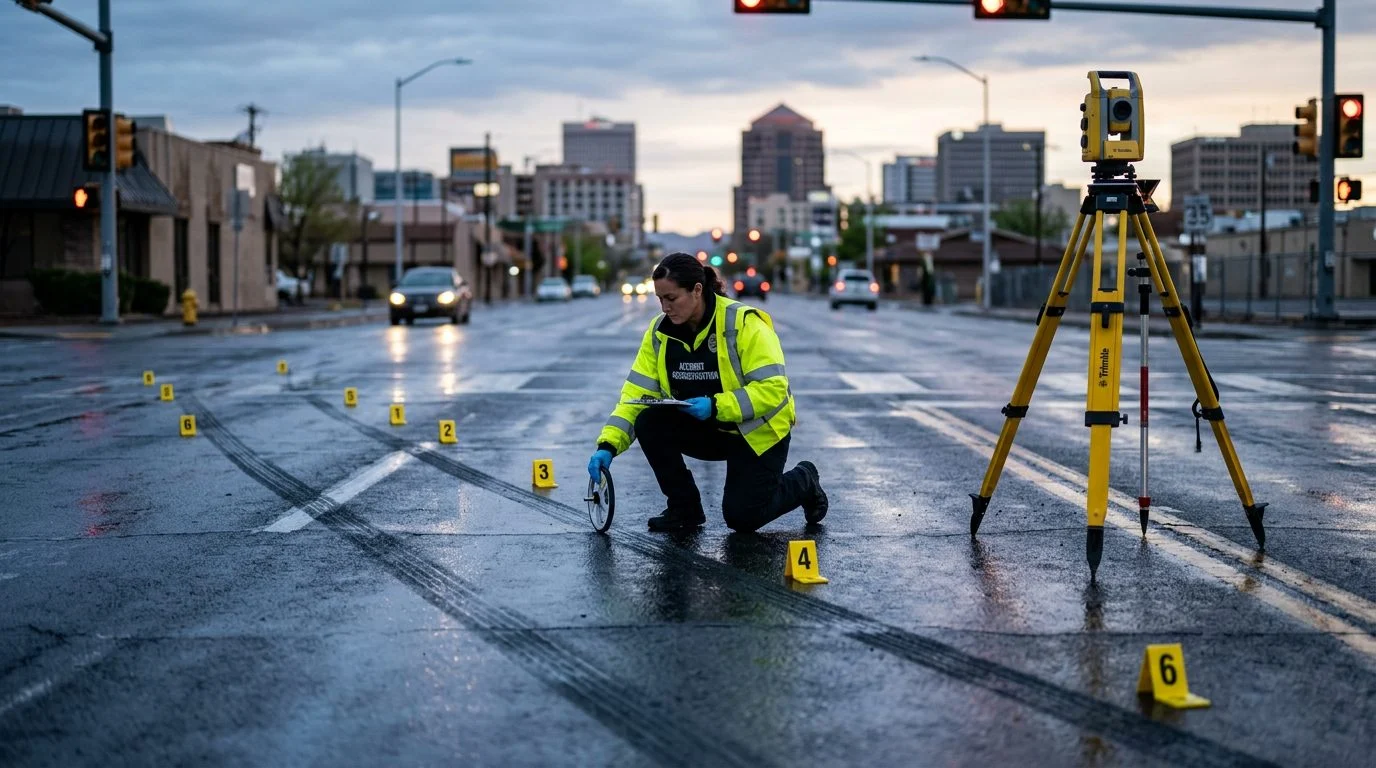
The typical pattern looks like this. A driver impaired by alcohol or drugs leaves the lane, runs a red light, or strikes another vehicle. A driver, passenger, pedestrian, or cyclist dies.
The claim is brought to recover the financial losses the death caused to the surviving beneficiaries.
If your family is trying to understand what happened and what comes next, our team is ready to talk through your questions whenever you're ready. Talk it through with our team — the first consultation is free, confidential, and carries no obligation.
Who Can Bring the Claim and What a Family May Pursue
The personal representative of the deceased person brings the wrongful death action, in that person’s name. The personal representative is the person appointed to handle the estate. NMSA 1978, § 41-2-3
The jury may award compensatory and exemplary damages. Compensatory damages address the financial loss to surviving family members. Exemplary damages (damages meant to punish especially reckless conduct) may be considered in some cases, and whether they apply turns on the specific facts.
The statute sends the proceeds to statutory beneficiaries, such as a surviving spouse, children, grandchildren, parents, or siblings; if there is no such kindred, the proceeds are disposed of in the manner authorized by law for the disposition of the personal property of deceased persons. The proceeds are not liable for the deceased person’s debts, and the statute sets the order of distribution. NMSA 1978, § 41-2-3
Thompson v. City of Albuquerque
How Fault Is Decided in a New Mexico Impaired Driving Crash
If a jury finds the person who died shared some fault, New Mexico reduces the total damages by that percentage. UJI 13-2218 NMRA New Mexico adopted comparative negligence in Scott v. Rizzo.
It need not be the only cause. Herrera v. Quality Pontiac
NMSA § 41-3A-1 provides: “In any cause of action to which the doctrine of comparative fault applies, the doctrine imposing joint and several liability upon two or more wrongdoers whose conduct proximately caused an injury to any plaintiff is abolished except as otherwise provided hereafter.”
That statute also caps liability at $50,000 for one person’s bodily injury or death in each occurrence, at $100,000 for bodily injury or death of two or more persons in each occurrence, subject to the $50,000 limit for any one person, and at $20,000 for property damage in each occurrence. Expect the other side to dispute the crash report, the timing of test results, and the chain of custody of blood or breath samples.
New Mexico Time Limits for Filing
A wrongful death action must be brought within three years after the cause of action accrues (NMSA 1978, § 41-2-2 — three years from the date of death). The cause of action accrues as of the date of death. NMSA 1978, § 41-2-2
The three-year period runs from the date of death. It does not wait for the criminal case to end.
Evidence can disappear fast. Dash camera video, vehicle data, and bar records may be overwritten or discarded. Torres v. El Paso Electric
How a Wrongful Death Case Moves Forward
Most families move through four stages. Each stage can take a different amount of time.
- Initial consultation: The family shares the crash facts, the decedent’s information, and any reports they hold. The lawyer explains the options in plain terms.
- Investigation: The team gathers the crash report, toxicology results, vehicle and phone data, and records from any establishment that served alcohol. Preservation letters may be sent to keep evidence from being lost.
- Claim and insurance: The team identifies every potentially responsible party and insurer, then presents the claim with documented losses.
- Negotiation or lawsuit: Many claims resolve through settlement talks. Others require filing suit, then discovery, mediation, and possibly trial.
Timelines vary with the complexity of the case, the number of parties, and the court’s schedule. Claims involving a government vehicle or employee can follow different rules and timing, so bring those facts up early.
Why Families Work With El Gringo Law
El Gringo Law handles wrongful death claims that arise from car accidents. Josh Wood is the responsible lawyer for this page. He is licensed in New Mexico and Arizona. Our team supports families through each stage of the claim.
Our practice areas include car accidents, trucking accidents, wrongful death, and catastrophic injuries. We serve clients in Albuquerque and Bernalillo County. You can reach us at elgringolaw.com.
The first consultation is free, confidential, and carries no obligation to continue.
Every case is different, and past results do not assure a similar outcome.
Not sure what your next step is?
Talk it through with our team — the first consultation is free, confidential, and carries no obligation.

Frequently Asked Questions About Drunk Driver Wrongful Death Claims
Does the driver need a DWI conviction before we can file?
No. The civil claim is separate from any criminal case. NMSA § 41-2-1, History: Laws 1882, ch.
How long do we have to file?
The general deadline is three years from the date of death (NMSA 1978, § 41-2-2 — three years from the date of death). NMSA 1978, § 41-2-2
Can a bar be held responsible?
For a claim brought by someone other than the patron who was served, such as a family whose loved one was killed by a drunk driver, New Mexico’s liquor liability statute (NMSA § 41-11-1) looks at whether the establishment served alcohol to a person who was intoxicated, whether that intoxication was reasonably apparent, and whether the establishment knew from the circumstances that the person was intoxicated. The stricter gross negligence and reckless disregard standard applies only to claims by the intoxicated patron, and the statute has separate provisions for sales to minors. NMSA 1978, § 41-11-1
If your family is still sorting out what happened and what comes next, reach out to El Gringo Law for a free, confidential first consultation with no obligation to continue. You can call, submit the contact form, or start a chat, and you can talk through the crash and your questions on your own timeline.
How our team works with your family
Focus on your family
We take time to understand what happened, who your family lost, and what questions matter most to you right now.
Listening first
Our team explains your options in plain language so you can make informed decisions at your own pace.
Careful case review
We look closely at the crash, the records, and the parties involved to understand how a wrongful death claim may apply to your situation.
Confidential and no obligation
Your free first consultation is confidential and carries no obligation to continue with our firm.
Be careful before speaking with insurers
Insurance adjusters may contact your family soon after a crash. Talk with a lawyer before you give a recorded statement or sign any release.
Questions families often ask
Does a criminal case come first?
A criminal case against the driver and a civil wrongful death claim are separate matters. Our team can explain how each may affect your family.
Who can be involved in a claim?
Depending on the facts, a claim may involve the impaired driver, other responsible parties, or insurers. We review each possibility with you.
What evidence matters?
Police reports, crash data, witness accounts, and records of the driver's whereabouts can all be important. Our team helps gather and organize them.
What is the first step?
Start with a free, confidential consultation. We will listen to your story and explain what we can and cannot offer at that stage.