Trucking Accidents | New Mexico
Trucking Accident Representation for New Mexico Families
Crashes with commercial trucks raise complex questions about the driver, the carrier and the company's records. El Gringo Law focuses on helping injured people and their families understand their options and pursue the compensation they may be owed.
By Josh Wood · Published October 29, 2026
Albuquerque Trucking Accident Lawyers | El Gringo Law
If a commercial truck hurt you or someone you love, the trucking company may be responsible for its own mistakes, not only the driver’s. Albuquerque trucking accident lawyers at El Gringo Law review these claims for people across New Mexico. This page explains how a claim against the carrier works, which records matter, and what to expect after a free consultation.
Not sure what your next step is?
Talk it through with our team — the first consultation is free, confidential, and carries no obligation.

What a trucking company negligence claim covers and who it is for
A trucking company negligence claim is a claim against the carrier for its own decisions and failures. It can stand alongside a claim against the driver.
These claims often involve:
- Injured drivers of passenger vehicles
- Passengers in those vehicles
- Pedestrians and cyclists
- Injured truck drivers
- Families of people killed in a crash
The central question is simple. Did the company’s choices, such as who it hired or how it kept its trucks, help cause the crash?
This page covers car accidents involving commercial trucks and the serious injuries that often follow. Those include catastrophic injuries, spinal cord injuries, amputations, burn injuries, and wrongful death.
Hiring, training, and supervision failures
In a claim of negligent hiring, supervising, or retaining an employee, a carrier can be liable when it knew or should have known that a driver would create an unreasonable risk of injury to a group or class that includes the injured person, and it failed to use ordinary care and that failure caused the injury. New Mexico uses a “knew or should have known” standard, not only proof of actual knowledge.
New Mexico’s pattern jury instruction lists the elements. The injured person must prove the employer knew or should have known of the risk. They must also prove the employer failed to use ordinary care, and that this failure caused the injury. See UJI 13-1647 NMRA.
Federal rules also create records that can show what the carrier knew. That file can include the driver’s application and motor vehicle records (49 CFR § 391.51).
Hours-of-service rules limit how long a driver can work. A driver may not drive without first taking 10 consecutive hours off duty. Under federal rules for property-carrying commercial motor vehicles, except as otherwise provided in 49 C.F.R. § 395.1, a driver may not drive after a period of 14 consecutive hours after coming on-duty following 10 consecutive hours off-duty. A driver also may not drive after having been on duty 60 hours in any period of 7 consecutive days if the employing motor carrier does not operate commercial motor vehicles every day of the week, or 70 hours in any period of 8 consecutive days if it does (49 C.F.R. § 395.3). Fatigue can show up in logs and electronic records.
When a post-accident alcohol test is required, the employer must stop trying to give it if eight hours pass after the crash, and must keep a record of why it was not done (49 CFR § 382.303).
Training and dispatch matter too. Was the driver trained for the load, route, and equipment? Did schedule pressure push the driver past safe limits? Training files and dispatch messages can answer those questions.
Maintenance and inspection failures
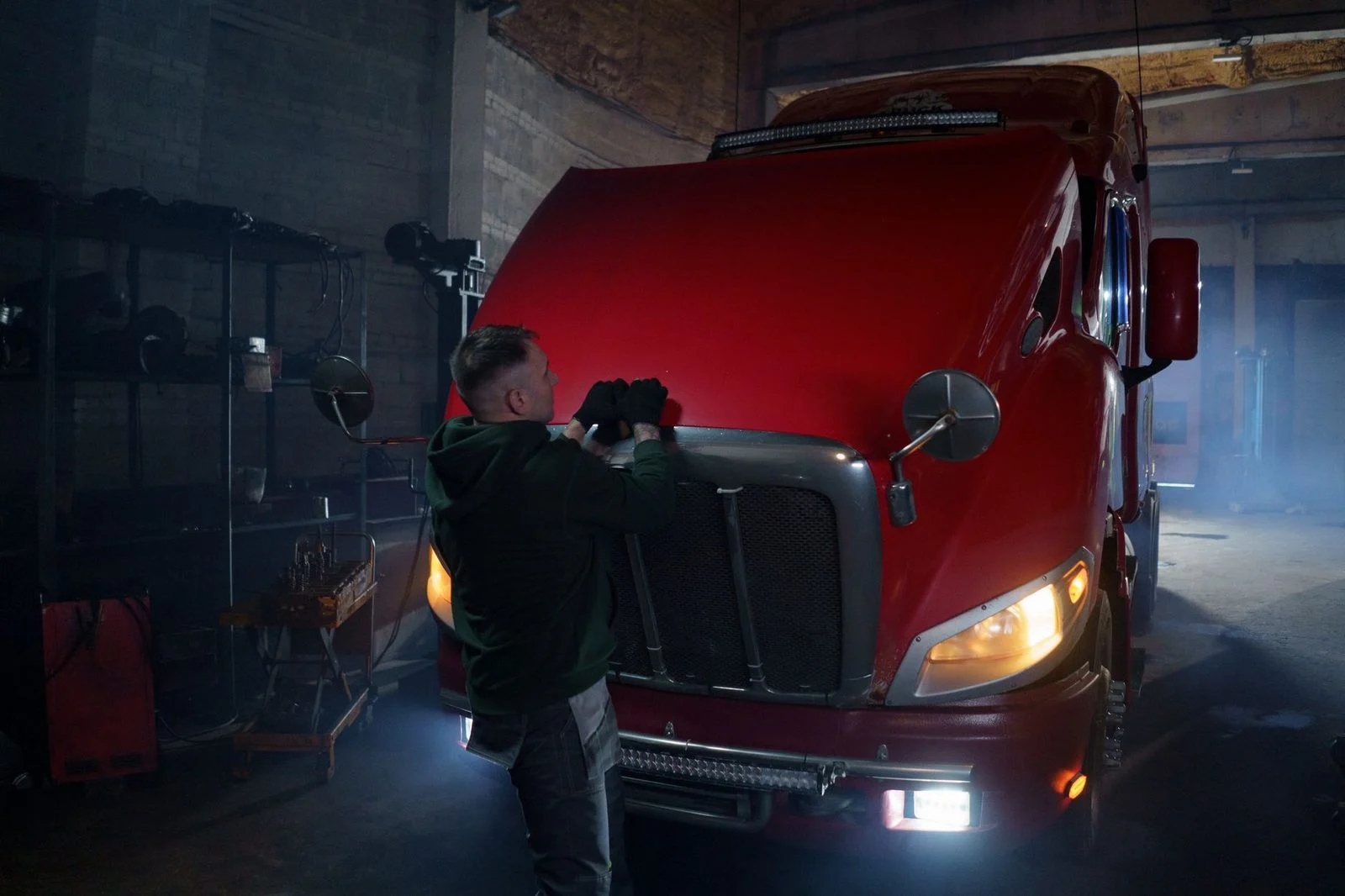
A carrier must inspect, repair, and maintain every vehicle under its control. It must also keep records of that work. A failure here can support a claim against the carrier (49 CFR § 396.3).
Problems that can contribute to crashes include:
- Brake defects
- Tire failures
- Steering or suspension problems
- Lighting defects
- Cargo securement problems
Roadside inspection reports and earlier out-of-service orders can show that a problem was known before the crash. Outside maintenance shops can also be part of the picture. Records can show whether the carrier kept responsibility for the equipment.
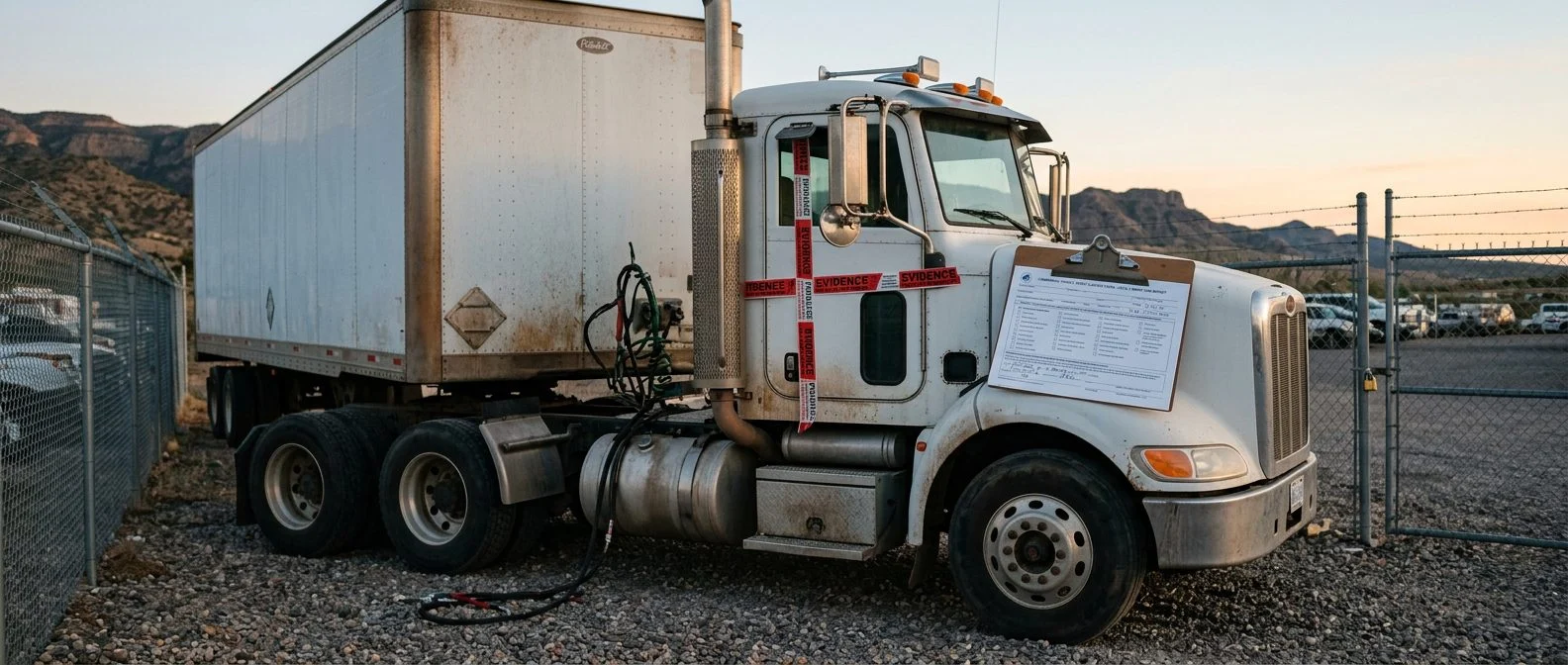
A post-crash inspection can reveal defects that were never repaired. That inspection depends on the truck being preserved quickly, which is why timing matters.
Evidence carriers must keep and what our team looks for
The carrier’s own paperwork is often the strongest evidence. Federal rules set minimum periods for keeping it.
- Inspection, repair, and maintenance records: kept for one year, and for six months after the vehicle leaves the carrier’s control (49 CFR § 396.3).
- Hours-of-service and electronic logging data: logs that show driving time and rest.
- Dispatch messages, GPS data, and phone records: when they relate to the crash.
- Crash history and prior safety problems: patterns that show how the carrier operated.
The rules set minimum retention periods. For companies subject to that part, records may be destroyed after the minimum periods in its appendix A, unless another government rule requires longer retention (49 CFR § 379.3). That is why a written request to preserve evidence should go out early.
Police reports, photos, witness names, and medical records connect the crash to your injuries. Our team gathers these items and sends preservation requests to the carrier and other parties. Those requests ask that records and the truck be kept, which helps stop routine disposal from removing key proof.
Who can be held responsible and how fault is shared
Several parties can share responsibility for one crash. Possible parties include the driver, the trucking company, a maintenance contractor, a leasing company, a cargo loader, or any other party whose conduct contributed.
If you were partly at fault, your damages are reduced by your share.
Under New Mexico’s several-liability statute, each defendant generally pays only its own share of fault. In any cause of action to which comparative fault applies, New Mexico abolishes joint and several liability except as the statute otherwise provides. One exception covers persons whose relationship to each other would make one person vicariously liable for the acts of the other, but only for that portion of the total liability attributed to those persons (N.M. Stat. § 41-3A-1).
An employer can answer for an employee’s on-the-job conduct under respondeat superior. Negligent hiring and retention claims do not require that scope (UJI 13-1647 NMRA).
Not sure what your next step is?
Talk it through with our team — the first consultation is free, confidential, and carries no obligation.
How the process works, step by step
Most cases begin with a free consultation and move through investigation, negotiation, and, if needed, a lawsuit.
- Free, confidential consultation. We review the crash facts, your injuries, and any papers you already have.
- Preservation letters. We send written requests to the carrier and other parties to keep key records and equipment.
- Medical and billing records. We gather treatment records and document how the injury affects work and daily life.
- Claim evaluation. We review the carrier’s conduct against the evidence, and we update you at each stage.
- Negotiation and filing. We negotiate with insurers. If needed, we file suit in the proper New Mexico court.
Deadlines matter. Among other limitation periods, N.M. Stat. § 37-1-8 sets a three-year period for actions over personal injury, but this period is not absolute: other statutes, exceptions and tolling rules can change the deadline that applies, depending on the facts of a particular claim. A wrongful death action must be brought within three years, and the claim accrues on the date of death (NMSA 1978, § 41-2-2).
Why choose El Gringo Law for a trucking company claim
Josh Wood is the responsible lawyer for this page. He is licensed in New Mexico and Arizona. El Gringo Law has more than one lawyer and support staff. Our team handles intake, records requests, and client communication.
The firm’s practice areas include:
- Trucking accidents and car accidents
- Premises liability and negligent security
- Wrongful death and sexual assault
- Catastrophic injuries, spinal cord injuries, amputations, and burn injuries
We serve clients in Bernalillo County, Sandoval County, Santa Fe, Rio Rancho, Las Cruces, Taos, and Farmington. Every case is different. Past outcomes do not predict a similar result in your claim.
Free consultation, fees, and costs
The first consultation is free, confidential, and carries no obligation to continue. The firm may advance court costs and litigation expenses. You may be responsible for these costs even if there is no recovery, as your written fee agreement describes. If there is no recovery, you may be responsible for court costs and the expenses of litigation, as your written fee agreement states.
Bring these items to your consultation so the review is useful:
- The crash report and any citations
- Photos of the vehicles, scene, and your injuries
- Letters from the trucking company or its insurer
- Medical bills and treatment notes
- A short list of missed work and daily tasks you can no longer do
Frequently asked questions and your next step
Most trucking crash questions come down to who is responsible and how long you have.
Can I bring a claim against the trucking company if the driver caused the crash?
Yes. A claim against the carrier can rest on its own hiring, supervision, or maintenance decisions, as well as the driver’s conduct.
What if I was partly at fault?
New Mexico reduces recovery by your share of fault, but it does not bar recovery.
How long do I have to act?
New Mexico’s general deadline for injury to the person is three years. A wrongful death action is also three years from the date of death (NMSA 1978, § 41-2-2 — three years from the date of death).
If a commercial truck crash left you or a family member hurt, and you want to know whether the trucking company’s own decisions played a role, contact El Gringo Law through the contact form or start a chat to set up your free consultation.
How We Can Help After a Truck Crash
Investigating the Carrier
We look beyond the driver to the trucking company's hiring, training, supervision and maintenance decisions, which may bear on who is responsible for your injuries.
Protecting Your Claim
We communicate with insurance companies and company representatives so you do not have to, and we help you avoid statements that could be used against your claim.
Focused on Serious Injuries
Trucking crashes often cause catastrophic injuries, spinal cord damage, amputations and burns. Our work includes the medical and financial impact on your life and family.
Serving Communities Across New Mexico
We represent clients in Santa Fe, Rio Rancho, Las Cruces, Bernalillo County, Sandoval County, Taos and Farmington.
Before You Speak With an Insurer
Trucking companies and their insurers often contact injured people quickly. Speaking with us first can help you understand your options.
What to Expect From Your Consultation
Free First Consultation
Your initial consultation is free, confidential and comes with no obligation to continue.
Honest Case Review
We listen to what happened, review the information you have and explain the questions we would need to answer.
Clear Next Steps
If we move forward together, we will explain how the case would proceed and what costs may apply, in writing, before you decide.
Ask Us Anything
Bring your questions about the crash, your injuries, or what comes next. We will answer them in plain language.