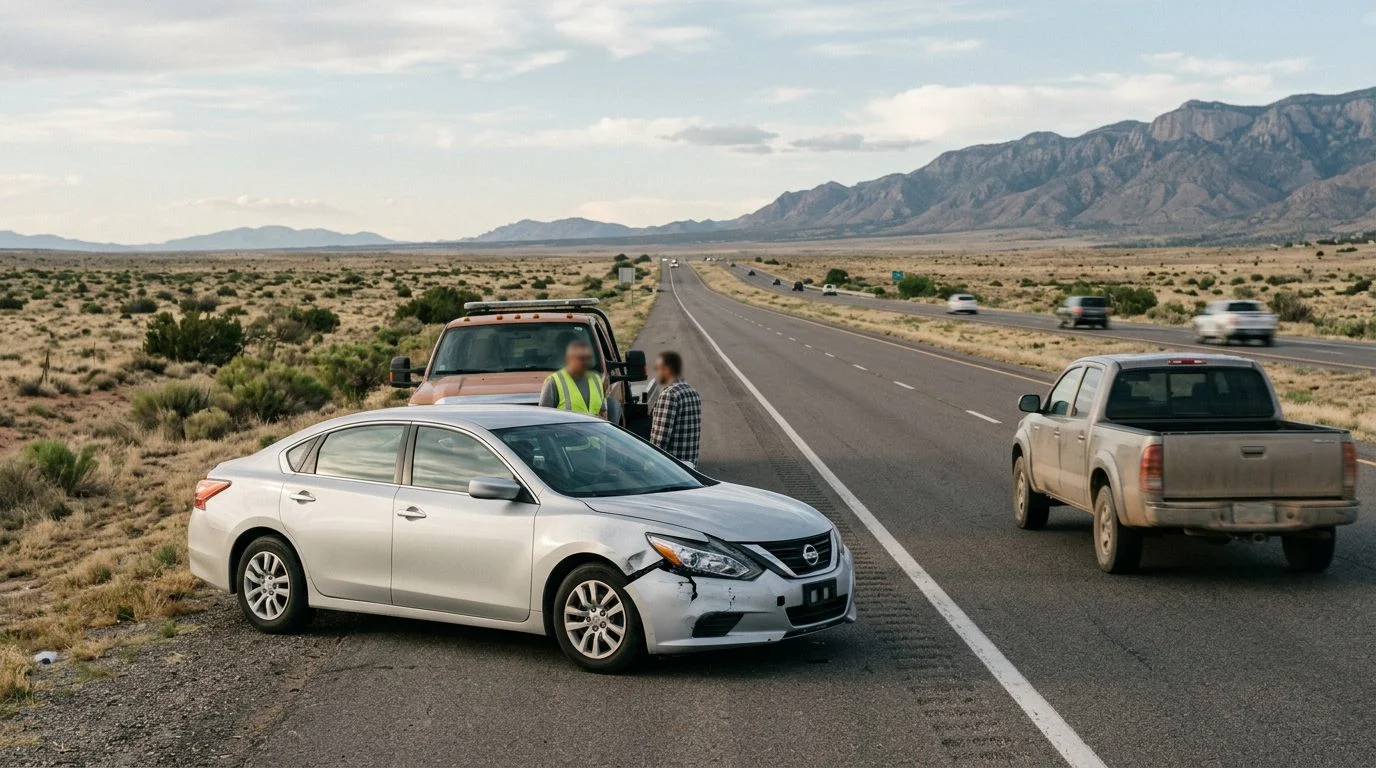
Car Accidents | New Mexico
Leading Causes of Crashes in New Mexico, and What to Do After One
Distracted driving, impairment, speed, and unsafe trucking practices are common threads in many New Mexico crashes. Learn what to watch for, and how El Gringo Law can help if you were hurt.
By Josh Wood · Published October 30, 2026
What Are the Leading Causes of Crashes in New Mexico?
The most common causes of crashes in New Mexico are impaired driving, speeding, distracted driving, failure to yield, and lane departure on rural roads. Commercial trucks add causes such as driver fatigue and load problems. This page explains each factor, the state rule behind it, and the records that can show it.
If you are reading this after a crash, you may be looking into it for a family member, a friend, or yourself. These questions often come up while injuries, medical visits and insurance calls are still happening. You don’t need to figure out everything at once.
If someone you love was hurt in a crash, you don't have to sort out the causes alone. Our team can talk with you, and the first consultation is free. Talk it through with our team — the first consultation is free, confidential, and carries no obligation.
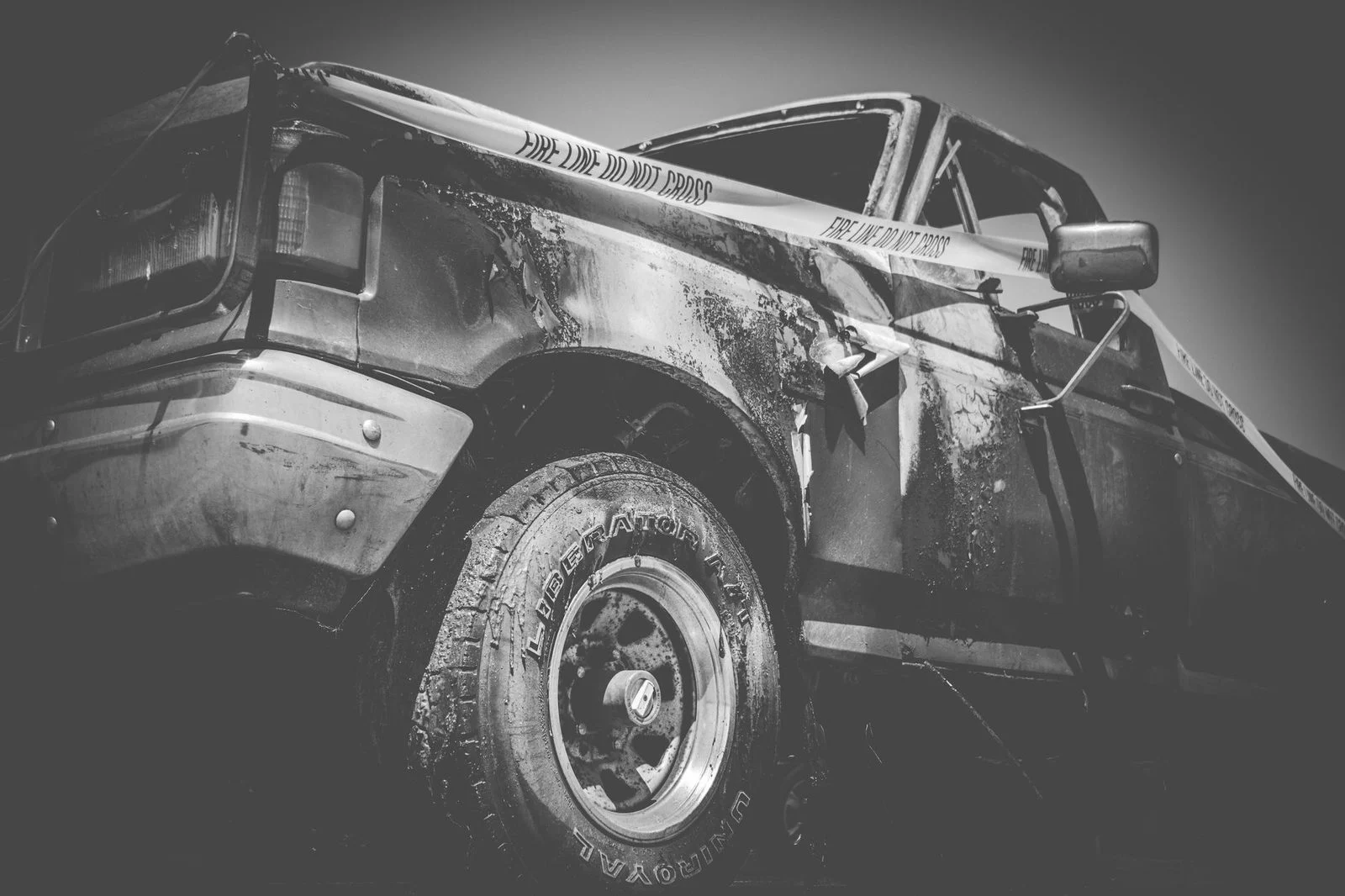
Why the cause of a crash matters after someone is hurt
The cause of a crash helps an injured person understand what happened and which records to ask for. A crash report records what drivers and officers reported about the scene, including factors that played a part.
New Mexico law sets deadlines for the paperwork. Under New Mexico law, when an accident results in bodily injury to or death of any person, or in total property damage to an apparent extent of five hundred dollars ($500) or more, each driver of a vehicle involved must forward a written report of the accident to the department of transportation within five days after the accident (N.M. Stat. Ann. § 66-7-207). Every law enforcement officer who investigates a reportable motor vehicle accident in the regular course of duty, whether at the scene or later by interviewing participants or witnesses, must forward a written report of the accident to the department of transportation within twenty-four hours after completing the investigation (N.M. Stat. Ann. § 66-7-207).
Cause also matters because of fault. New Mexico uses pure comparative negligence, so an injured person’s own share of fault reduces damages but does not bar recovery (Scott v. Rizzo). A negligence claim generally asks whether the other person owed a duty, breached it, and caused the harm (Herrera v. Quality Pontiac).
The causes below describe common patterns, not predictions. Every crash turns on its own facts. For a broader look at crash claims in the state, see our New Mexico trucking and crash guide.
Impaired driving: alcohol and drugs behind the wheel
Impaired driving is a serious cause of crashes, and New Mexico law makes it unlawful to drive while under the influence of intoxicating liquor. New Mexico makes it unlawful to drive a vehicle within the state while under the influence of intoxicating liquor, and when an offender with a first conviction commits aggravated driving under the influence of intoxicating liquor or drugs, the statute requires a sentence of not less than forty-eight consecutive hours in jail, which shall not be suspended, deferred or taken under advisement, in addition to the other penalties (N.M. Stat. Ann. § 66-8-102).
Alcohol and drugs slow reaction time. They make it harder to hold a lane and to judge speed and following distance.
Impairment shows up in the officer’s narrative, citations, field testing notes and toxicology results where they exist. Impaired crashes happen at any hour, on city streets and on rural highways alike.
Speeding and aggressive driving
Speeding is a driving choice that New Mexico law addresses directly. In every event, New Mexico requires drivers to control their speed as necessary to avoid colliding with a person, vehicle or other conveyance on or entering the highway, to comply with legal requirements established by the department of transportation or the New Mexico state police division of the department of public safety, to protect workers in construction zones posted as double fine zones or other safety zones posted as double fine zones as designated by the department of transportation, and to meet the duty of all persons to use due care (N.M. Stat. Ann. § 66-7-301).
Posted limits vary by place. The statute sets 30 miles per hour in a business or residence district, and 15 miles per hour when passing a school while children are going to or leaving school, when the zone is properly posted.
Higher speed means a longer stopping distance. It also leaves less time to react when traffic slows ahead. A crash at speed usually does more damage to the people inside.
Following too closely is a related problem. New Mexico law prohibits a motor vehicle driver from following another vehicle more closely than is reasonable and prudent, and the driver must have due regard for the speed of the vehicles, the traffic upon the highway and the condition of the highway (N.M. Stat. Ann. § 66-7-318). Speed often appears in the officer’s narrative and the scene diagram, so those documents are worth requesting.
Distracted driving, including phone use
Distracted driving is anything that pulls attention away from the road. New Mexico law specifically limits reading and typing on a handheld phone while driving. While driving a motor vehicle in New Mexico, a person may not read or view a text message or manually type on a handheld mobile communication device for any purpose, except to summon medical or other emergency help or unless the device is an amateur radio and the driver holds a valid amateur radio operator license issued by the federal communications commission (N.M. Stat. Ann. § 66-7-374).
“Driving” under that statute includes being temporarily stopped in traffic or at a light. So a text sent at a red light still counts. The definition leaves out voice-operated and hands-free devices that work without the use of a hand, except to start or stop a feature. NMSA 1978, § 66-7-374 reads: “(2) “handheld mobile communication device” means a wireless communication device that is designed to receive and transmit text or image messages, but “handheld mobile communication device” excludes global positioning or navigation systems, devices that are physically or electronically integrated into a motor vehicle and voice-operated or hands-free devices that allow the user to compose, send or read a text message without the use of a hand except to activate, deactivate or initiate a feature or function; and.” Under NMSA § 66-7-374, a person shall not read or view a text message or manually type on a handheld mobile communication device for any purpose while driving a motor vehicle, except to summon medical or other emergency help or unless that device is an amateur radio and the driver holds a valid amateur radio operator license issued by the federal communications commission.
These are not banned by that statute, but they can still play a part in a crash.
A driver’s phone use is not always visible in the crash report. Phone records, vehicle data and witness statements can help show distraction in a specific crash.
Intersections, failure to yield, and lane departure on rural roads
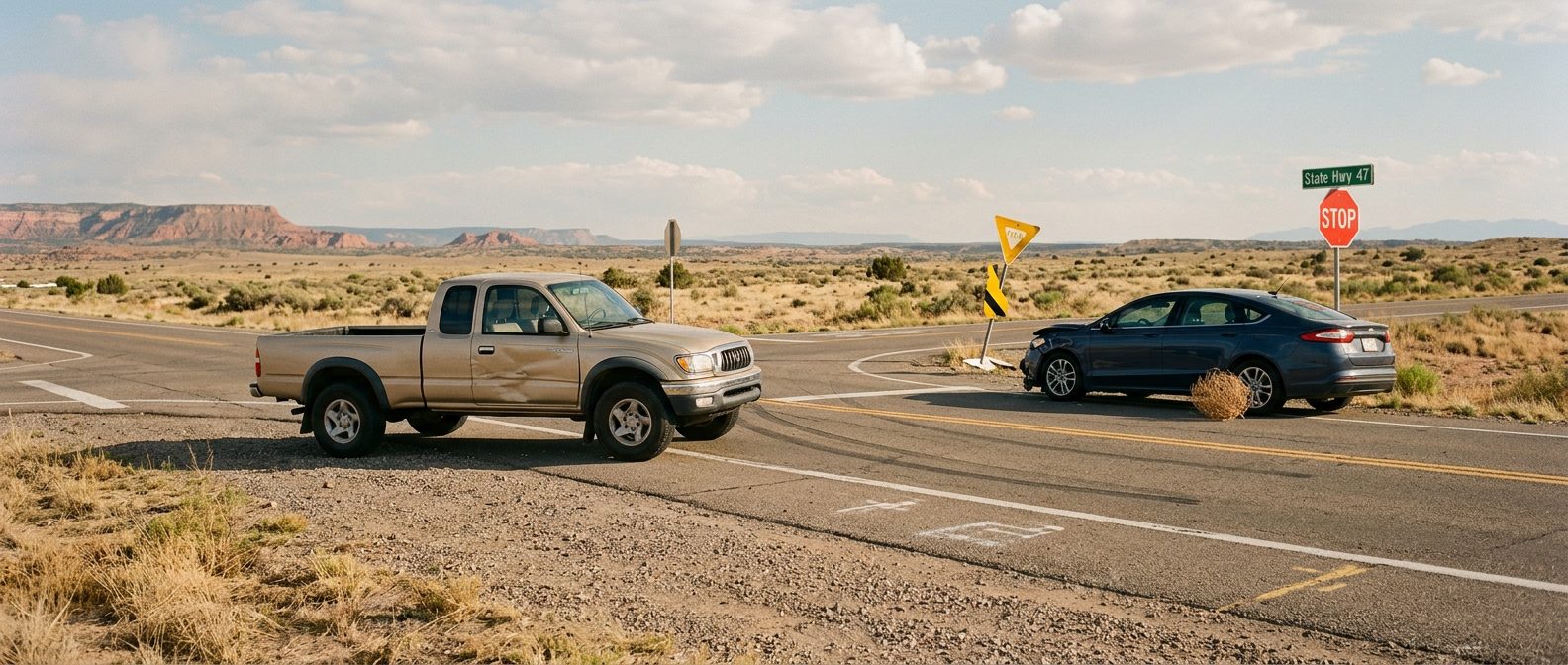
Many crashes come down to who had the right of way at an intersection. Under New Mexico’s right-of-way rules, a driver approaching an intersection must yield the right-of-way to a vehicle that has already entered the intersection from a different highway (N.M. Stat. Ann. § 66-7-328).
At a yield sign, the rules are stricter. When a driver who has driven past a yield sign without stopping is involved in a collision with a vehicle in the intersection, New Mexico law deems the collision prima facie evidence that the driver failed to yield right-of-way (N.M. Stat. Ann. § 66-7-330).
Lane departure is common on two-lane and rural highways. Drifting, overcorrecting and head-on collisions often start when a driver leaves the lane. Wherever a roadway has been divided into multiple clearly marked lanes for traffic, New Mexico requires that a vehicle be driven as nearly as practicable entirely within a single lane and not be moved from that lane until the driver has first ascertained that the movement can be made with safety (N.M. Stat. Ann. § 66-7-317). Under NMSA § 66-7-317, upon a roadway divided into three lanes, a vehicle shall not be driven in the center lane except when overtaking and passing another vehicle where the roadway is clearly visible and the center lane is clear of traffic within a safe distance, in preparation for a left turn, or where the center lane is at that time allocated exclusively to traffic moving in the direction the vehicle is proceeding and is signposted to give notice of that allocation.
Busy corridors add merge and intersection conflicts. These include Interstate 25 through Santa Fe, Rio Rancho and Las Cruces, and the highways in Taos and Farmington. Road curves, weather and visibility are recorded in the report when the officer notes them.
Not sure what your next step is?
Talk it through with our team — the first consultation is free, confidential, and carries no obligation.
Commercial trucks: fatigue, maintenance, and load problems
A commercial truck crash can come from the driver’s hours, the truck’s condition, or how the load was handled. The cause is not always the other driver’s error alone.
Federal rules limit driving time. A driver may not operate a commercial motor vehicle when ability or alertness is so impaired, or so likely to become impaired, through fatigue, illness or another cause, that it is unsafe, except in a case of grave emergency where the hazard to occupants of the commercial motor vehicle or other users of the highway would be increased by compliance, in which case the driver may continue to operate the vehicle to the nearest place at which that hazard is removed (49 C.F.R. § 392.3).
Records can show these problems. Electronic logging device data, maintenance logs, inspection reports, bills of lading and driver qualification files can all be relevant.
Companies must keep records for minimum retention periods. After those periods, records may be destroyed at the company’s discretion (49 C.F.R. § 379.3). Because these are minimums, early requests matter.
What the crash report can and cannot tell you
The crash report is one record among many. Unless the statute itself provides otherwise, New Mexico law bars the use of an accident report as evidence in any civil or criminal trial arising out of an accident (N.M. Stat. Ann. § 66-7-213). The statute lists exceptions, such as certain insurance-related proceedings.
The officer’s narrative and the contributing-factor entries show what the officer recorded. Other evidence can show cause too. Useful items include photographs, dashcam and vehicle event data, witness statements, medical records and scene diagrams.
Keep copies of the report, insurance letters and photos. Write a dated timeline of the crash while your memory is fresh, and note the date and location.
How long do drivers have to report a crash in New Mexico?
A driver in a qualifying crash must send a written report to the state within five days. New Mexico’s accident-reporting statute, Section 66-7-207, provides that every law enforcement officer who, in the regular course of duty, investigates a reportable motor vehicle accident shall forward a written report of that accident to the department of transportation within twenty-four hours after completing the investigation.
Can a crash report be used as evidence in court?
Generally no, under New Mexico law.
Can someone be partly at fault and still recover?
Yes. Under pure comparative negligence, fault reduces damages but does not bar recovery.
Is texting while driving illegal in New Mexico?
Reading or typing a text on a handheld device while driving is banned. The main exception is summoning emergency help.
If a crash hurt someone you care about, a free consultation is available
If a crash hurt someone you love, a free, confidential first conversation can help you think through the cause and your options. You may be reading this between medical appointments, while also keeping work and family on track. That is a hard place to be.
Maybe the other driver had been drinking, looked at a phone, or ran a stop sign. Maybe the crash happened on a two-lane highway, or involved a commercial truck, and you are not sure which records exist.
If you want to talk through what happened, reach out through our contact form. Our initial consultation is free, confidential, and comes with no obligation to continue.
Josh Wood is the responsible lawyer for this page. You can reach El Gringo Law through the website at elgringolaw.com.
How El Gringo Law Helps After a Crash
Reviewing the Crash Facts
We look at the police report, photos, and other records to understand how the crash happened and who may be responsible.
Working With Your Medical Team
We help you keep track of treatment and the costs of your injuries so the full impact of the crash is documented.
Handling Insurance Communications
We can deal with insurance adjusters on your behalf so you can focus on your recovery.
Clear Answers, No Pressure
We explain your options in plain language and let you decide what comes next.
Keep Your Crash Information Safe
Take photos of the scene and vehicles, get names and insurance details from everyone involved, and keep copies of every medical visit and bill. Avoid giving recorded statements to insurance companies before you have talked with a lawyer.
Common Causes of New Mexico Crashes
Distracted Driving
Phones, texting, eating, and adjusting in-car devices take attention away from the road and often lead to rear-end collisions and lane departures.
Impaired Driving
Alcohol, drugs, and some prescription medications slow reaction times and impair judgment, which can turn ordinary traffic into serious crashes.
Speeding and Aggressive Driving
Driving too fast for conditions reduces the time available to stop or steer away, increasing the severity of impacts.
Failure to Yield
Drivers who fail to yield at intersections, merges, and left turns cause many of the crashes we see involving car and truck occupants.
Hazardous Road Conditions
Poor lighting, unmarked hazards, and weather can contribute to crashes, especially when they are not addressed by those responsible for the roadway.